Fieldale Historic District

Why it's listed
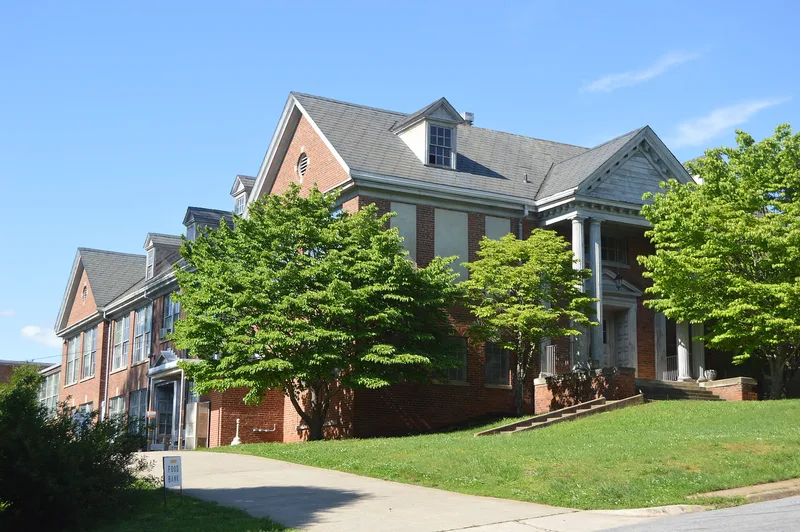
Fieldale is a company mill town in central Henry County, Virginia, built by Marshall Field & Company of Chicago. The company bought 1,841 acres in 1916-1917 and opened the town in 1919 to make quality towels for its department store. The plan had three parts: the brick mill complex, a business district with a bank, post office, grocery and theater, and a residential area to the west. Company-built one-story bungalows, mostly from stock plans, were rented to workers for 25 cents per room per week. The company also financed two schools and a community center. In 1941 the company sold the houses to its employees, and the mills became independent in 1953. They went bankrupt in 2003 and were bought in 2006 for manufacturing and distribution. The district contains hundreds of resources, including the mills, a former railroad depot, a Warren truss bridge and a downtown of two-story brick buildings. Later ranch houses and secondary buildings are non-contributing.
Machine-generated summary. This summary was generated by a language model from the official nomination document and has not been reviewed line by line by an editor. It may contain errors. Check the source document before relying on any detail. Source: nomination document (PDF) · catalog entry. Generated October 2026 (model claude-sonnet-5-5, prompt v1.0-2026-10-29).
| Styles | Bungalow/Craftsman, Commercial Style, Colonial Revival, Georgian Revival, Tudor Revival, Industrial, Warren truss bridge |
|---|---|
| Areas of significance | Commerce, Industry, Social History |
| Acreage | 257.5 |
| Boundary source | NPS cultural-resource GIS polygon |
| Full listing page | Fieldale Historic District (property record) |
What listing means for this property
This is a historic district. Buildings within its boundary are either contributing (they add to the district's significance) or non-contributing. Owners of contributing income-producing buildings can claim the 20% federal rehabilitation tax credit; homeowners should look at state credits. National Register districts impose no design review by themselves; a local historic district ordinance, if one exists, does (the difference explained).
General information, not legal or tax advice. Rules change; confirm with your State Historic Preservation Office or a qualified adviser.