Fairy Stone State Park Historic District

Why it's listed
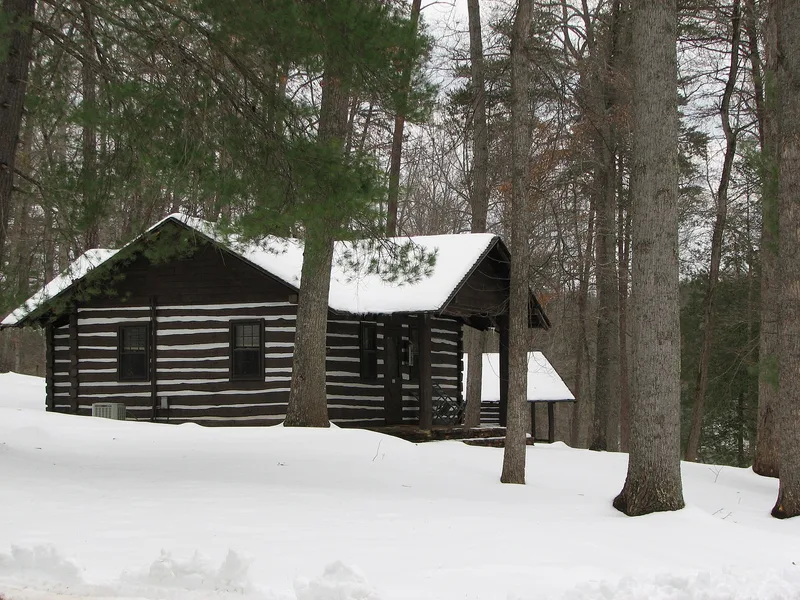
Fairy Stone State Park is a recreational landscape wrapped around Fairy Stone Lake, a manmade lake formed by damming Goblintown Creek in Patrick and Henry Counties, Virginia. Most of its core was built between 1933 and 1942 by the Civilian Conservation Corps. The park includes a meandering entrance road with stone retaining walls, nine original log cabins on the lakefront and hillside, a beach with a concession building and bath house, stone picnic shelters, a log restroom, a horse barn, a custodian's house and a campground with a cross-shaped bath house. Buildings use stone, logs and board-and-batten siding in a rustic style that follows National Park Service guidelines. Later additions, such as a visitor center, an amphitheater and newer campgrounds, date outside the historic period. The district matters as an example of how the CCC and the National Park Service shaped Virginia's first state parks, and because nearly all of its CCC-era resources survive.
Machine-generated summary. This summary was generated by a language model from the official nomination document and has not been reviewed line by line by an editor. It may contain errors. Check the source document before relying on any detail. Source: nomination document (PDF) · catalog entry. Generated October 2026 (model claude-sonnet-5-5, prompt v1.0-2026-10-29).
| Period of significance | 1933-1942 |
|---|---|
| Styles | Late 19th and Early 20th Century American Movements; Modern Movement |
| Areas of significance | Architecture, Entertainment/Recreation, Landscape Architecture |
| Acreage | 4868.6 |
| Boundary source | NPS cultural-resource GIS polygon |
| Full listing page | Fairy Stone State Park Historic District (property record) |
What listing means for this property
This is a historic district. Buildings within its boundary are either contributing (they add to the district's significance) or non-contributing. Owners of contributing income-producing buildings can claim the 20% federal rehabilitation tax credit; homeowners should look at state credits. National Register districts impose no design review by themselves; a local historic district ordinance, if one exists, does (the difference explained).
General information, not legal or tax advice. Rules change; confirm with your State Historic Preservation Office or a qualified adviser.