East Belmont

Why it's listed
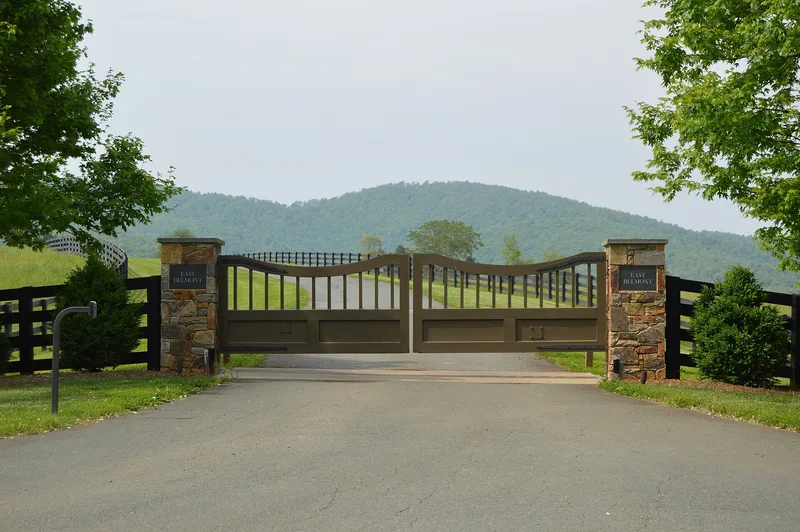
East Belmont is a working farm near Keswick in eastern Albemarle County, at the base of the Southwest Mountains. The nominated 281 acres hold a main house built in three stages: a frame section from about 1811-1814, a two-story, five-bay Federal brick block added around 1834, and a 1960s sunroom. The brick block features Flemish bond brickwork on all four sides, a pedimented south portico with Chinese Chippendale railings, and largely original Federal woodwork. Historic outbuildings include a log corncrib, a stone and frame barn, a chicken house and the chimney of an early kitchen. The property is linked to John Rogers, Sr., who restored gullied land through crop rotation and horizontal plowing, helped found the Albemarle Agricultural Society alongside Thomas Jefferson, James Madison and James Monroe, and took first prize for best-regulated farm in 1828. The brick section is attributed to Lewis Level, an enslaved mason, which makes it a rare antebellum house credited to a Black craftsman.
Machine-generated summary. This summary was generated by a language model from the official nomination document and has not been reviewed line by line by an editor. It may contain errors. Check the source document before relying on any detail. Source: nomination document (PDF) · catalog entry. Generated October 2026 (model claude-sonnet-5-5, prompt v1.0-2026-10-29).
| Period of significance | 1811-1838 |
|---|---|
| Styles | Early Republic: Federal |
| Areas of significance | Architecture, Agriculture |
| Acreage | 281.3 |
| Boundary source | NPS cultural-resource GIS polygon |
| Full listing page | East Belmont (property record) |
What listing means for this property
This is a historic district. Buildings within its boundary are either contributing (they add to the district's significance) or non-contributing. Owners of contributing income-producing buildings can claim the 20% federal rehabilitation tax credit; homeowners should look at state credits. National Register districts impose no design review by themselves; a local historic district ordinance, if one exists, does (the difference explained).
General information, not legal or tax advice. Rules change; confirm with your State Historic Preservation Office or a qualified adviser.