Derby Historic District
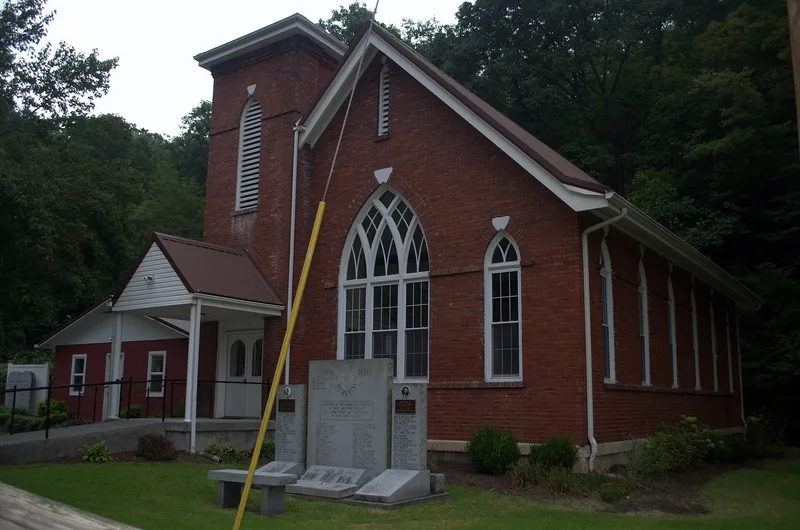

Why it's listed
Derby is a former coal company town strung along Preacher Creek in Wise County, Virginia, about four miles north of Appalachia and Big Stone Gap. Planned in 1922 and built in 1923 by the Stonega Coke and Coal Company, it incorporates the upper end of the earlier camp of Arno, where a row of frame houses dates from about 1908 or 1909. Most Derby buildings are made of hollow ceramic tile, with brick used for the major public buildings. Two-story double houses, each with four rooms per side, dominate the town, and larger five-room versions housed favored employees. Craftsman-style details include exposed rafter ends and square porch posts on tile railings. A superintendent's house, doctor's house, hose house, Gothic Revival Methodist church and a section once reserved for Black workers show how the company organized the community. The district is listed for its architecture and its role in the coal industry, with a period of significance from 1922 to 1952.
Machine-generated summary. This summary was generated by a language model from the official nomination document and has not been reviewed line by line by an editor. It may contain errors. Check the source document before relying on any detail. Source: nomination document (PDF) · catalog entry. Generated October 2026 (model claude-sonnet-5-5, prompt v1.0-2026-10-29).
| Period of significance | 1922-1952 |
|---|---|
| Styles | Colonial Revival; Bungalow/Craftsman |
| Areas of significance | Architecture, Industry |
| Acreage | 40 |
| Boundary source | NPS cultural-resource GIS polygon |
| Full listing page | Derby Historic District (property record) |
What listing means for this property
This is a historic district. Buildings within its boundary are either contributing (they add to the district's significance) or non-contributing. Owners of contributing income-producing buildings can claim the 20% federal rehabilitation tax credit; homeowners should look at state credits. National Register districts impose no design review by themselves; a local historic district ordinance, if one exists, does (the difference explained).
General information, not legal or tax advice. Rules change; confirm with your State Historic Preservation Office or a qualified adviser.