Commerce Street Industrial Historic District

Why it's listed
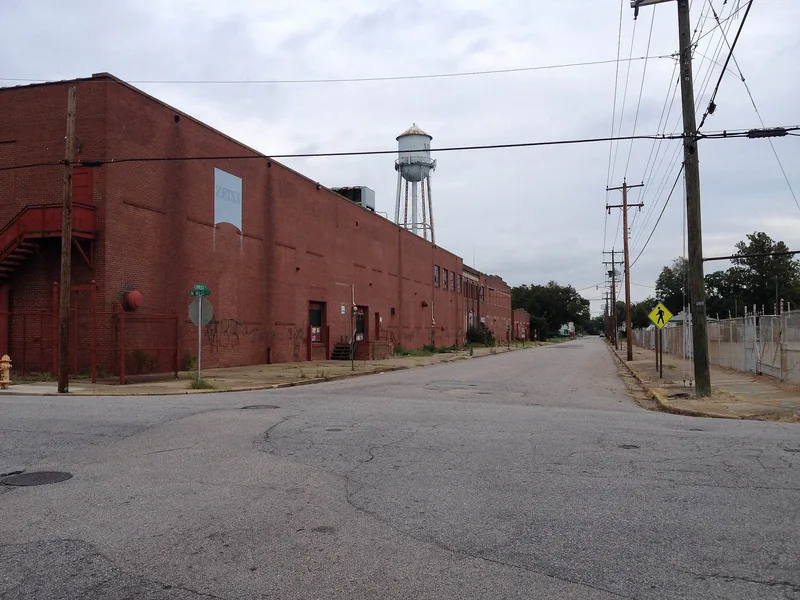
Commerce Street in Petersburg's Pride's Field neighborhood holds a linear industrial district of four large brick factory complexes built between about 1915 and 1925. They are the Petersburg Trunk and Bag Company, Titmus Optical Company, Rogers and Madison Trunk Corporation and Southern Chemical Company. Each grew through many additions into a compound of interconnected two- to four-story buildings, designed for function and flexible space rather than stylistic display. Titmus Optical's mid-1930s office is a Colonial Revival exception, with granite detailing. A handful of late nineteenth and early twentieth century frame dwellings and one commercial building survive between the factories, recalling the modest homes and stores that once lined the street. The district reflects Petersburg's early twentieth century manufacturing growth, including a luggage industry that peaked at twenty factories in 1922 and an optical lens trade boosted by World War I. Rail spurs of the Seaboard Air Line connected the plants to wider markets. The industrial character sets the corridor apart from the largely residential neighborhood around it.
Machine-generated summary. This summary was generated by a language model from the official nomination document and has not been reviewed line by line by an editor. It may contain errors. Check the source document before relying on any detail. Source: nomination document (PDF) · catalog entry. Generated October 2026 (model claude-sonnet-5-5, prompt v1.0-2026-10-29).
| Styles | Late 19th and Early 20th Century Revivals: Colonial Revival; Other: Vernacular |
|---|---|
| Areas of significance | Industry, Architecture |
| Acreage | 9.6 |
| Boundary source | NPS cultural-resource GIS polygon |
| Full listing page | Commerce Street Industrial Historic District (property record) |
What listing means for this property
This is a historic district. Buildings within its boundary are either contributing (they add to the district's significance) or non-contributing. Owners of contributing income-producing buildings can claim the 20% federal rehabilitation tax credit; homeowners should look at state credits. National Register districts impose no design review by themselves; a local historic district ordinance, if one exists, does (the difference explained).
General information, not legal or tax advice. Rules change; confirm with your State Historic Preservation Office or a qualified adviser.