Collins Ferry Historic District

Why it's listed
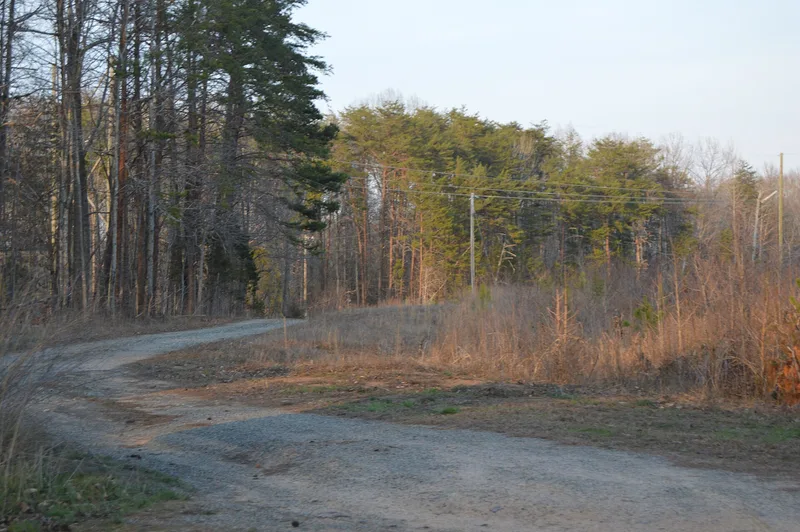
Along the south bank of the Staunton River near Nathalie, in Halifax County, Virginia, a 726-acre district preserves two historic farm clusters divided by Buffalo Creek. One centers on Collins Ferry, a two-story, five-bay Federal-style brick house of about 1810 with modillion cornice, fanlit entries and carved mantels. Nearby are log tobacco barns, a corn crib, a tenant house, a family cemetery begun in 1836, and the sites of Collins' mill and ferry. The other cluster is the McHaney Hubbard Farm, anchored by a two-story frame Greek Revival house of 1856, with barns, a quarter site and a family cemetery. Remnants of the old ferry road link the two. The ferry road became a main route for farmers hauling tobacco to Lynchburg, though the river crossing was dangerous and saw fatal accidents. The district was listed for its role in transportation and settlement and for its architecture, with resources dating from about 1810 to 1947.
Machine-generated summary. This summary was generated by a language model from the official nomination document and has not been reviewed line by line by an editor. It may contain errors. Check the source document before relying on any detail. Source: nomination document (PDF) · catalog entry. Generated October 2026 (model claude-sonnet-5-5, prompt v1.0-2026-10-29).
| Period of significance | ca. 1810 to ca. 1947 |
|---|---|
| Styles | Early Republic: Federal; Mid-19th Century: Greek Revival |
| Areas of significance | Architecture, Transportation, Exploration/Settlement |
| Acreage | 726.1 |
| Boundary source | NPS cultural-resource GIS polygon |
| Full listing page | Collins Ferry Historic District (property record) |
What listing means for this property
This is a historic district. Buildings within its boundary are either contributing (they add to the district's significance) or non-contributing. Owners of contributing income-producing buildings can claim the 20% federal rehabilitation tax credit; homeowners should look at state credits. National Register districts impose no design review by themselves; a local historic district ordinance, if one exists, does (the difference explained).
General information, not legal or tax advice. Rules change; confirm with your State Historic Preservation Office or a qualified adviser.