Clifton Historic District

Why it's listed
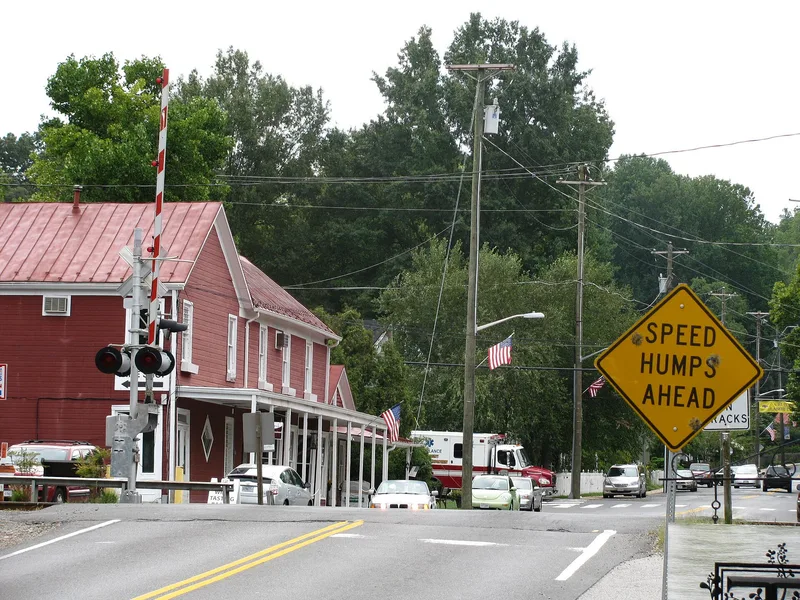
Clifton is a small railroad village in southwestern Fairfax County, Virginia, and its historic district preserves sixty-two buildings along Main Street and four side streets. Most are modest frame houses built between 1880 and 1910, along with three churches, a few commercial buildings and two local government buildings. The village grew from land purchases made in 1868 by Harrison G. Otis, a New Yorker who settled near the Orange and Alexandria Railroad depot. He became the first postmaster, opened roads and built the Clifton Hotel in 1869. By 1878 about twenty families lived there, and by 1910 the incorporated town had 200 residents, supported by lumbering, sawmills, farming, talc mining and railroad work. Houses share similar scale and setbacks, and many 1970s restorations added rooms only at the rear. Notable buildings include the Quigg House, a Second Empire design with a mansard roof, the stone Presbyterian church of 1871, and the Buckley Brothers Store. Together they keep the feel of a turn-of-the-century village.
Machine-generated summary. This summary was generated by a language model from the official nomination document and has not been reviewed line by line by an editor. It may contain errors. Check the source document before relying on any detail. Source: nomination document (PDF) · catalog entry. Generated October 2026 (model claude-sonnet-5-5, prompt v1.0-2026-10-29).
| Period of significance | 1860-1910 |
|---|---|
| Styles | Vernacular frame buildings, with a French Second Empire house (Quigg House) and neo-Gothic Baptist church |
| Areas of significance | Transportation, Architecture |
| Acreage | 42 |
| Boundary source | NPS cultural-resource GIS polygon |
| Full listing page | Clifton Historic District (property record) |
What listing means for this property
This is a historic district. Buildings within its boundary are either contributing (they add to the district's significance) or non-contributing. Owners of contributing income-producing buildings can claim the 20% federal rehabilitation tax credit; homeowners should look at state credits. National Register districts impose no design review by themselves; a local historic district ordinance, if one exists, does (the difference explained).
General information, not legal or tax advice. Rules change; confirm with your State Historic Preservation Office or a qualified adviser.