Cleridge

Why it's listed
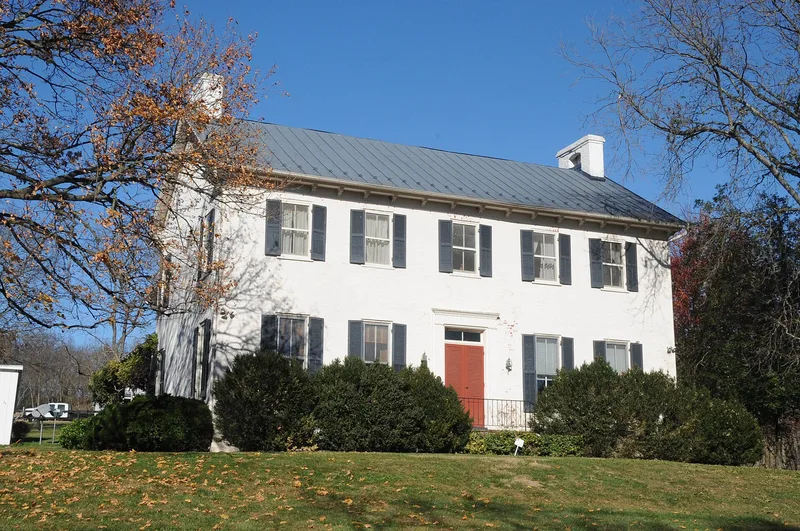
Cleridge is a farm property about eight miles northeast of Winchester, Virginia, spread across both sides of Opequon Creek in Frederick and Clarke Counties. Its main building is a five-bay, two-and-one-half-story Federal-style brick house built around 1790, set on a limestone foundation and facing the creek. The front wall is laid in Flemish bond, and the interior keeps fine paneling, a turned stair, mantels with Chippendale and Federal motifs, and rare early-nineteenth-century stenciling in the master bedchamber. A rear addition from 1882-83 added bathrooms and a kitchen wing while leaving the original block largely intact. Other contributing resources include a brick well, an icehouse and blacksmith shop, a carriage house, a poultry house, a farm manager's house, and the cultivated and wooded land. The property is recognized for its architecture and for its agricultural history. In 1879 the Clevenger family's farm produced a higher value of goods than nearly any other in Frederick County. The period of significance runs from about 1790 to 1960.
Machine-generated summary. This summary was generated by a language model from the official nomination document and has not been reviewed line by line by an editor. It may contain errors. Check the source document before relying on any detail. Source: nomination document (PDF) · catalog entry. Generated October 2026 (model claude-sonnet-5-5, prompt v1.0-2026-10-29).
| Period of significance | circa 1790-1960 |
|---|---|
| Styles | Early Republic: Federal |
| Areas of significance | Architecture, Agriculture |
| Acreage | 591 |
| Boundary source | NPS cultural-resource GIS polygon |
| Full listing page | Cleridge (property record) |
What listing means for this property
This is a historic district. Buildings within its boundary are either contributing (they add to the district's significance) or non-contributing. Owners of contributing income-producing buildings can claim the 20% federal rehabilitation tax credit; homeowners should look at state credits. National Register districts impose no design review by themselves; a local historic district ordinance, if one exists, does (the difference explained).
General information, not legal or tax advice. Rules change; confirm with your State Historic Preservation Office or a qualified adviser.