City Point Historic District

Why it's listed
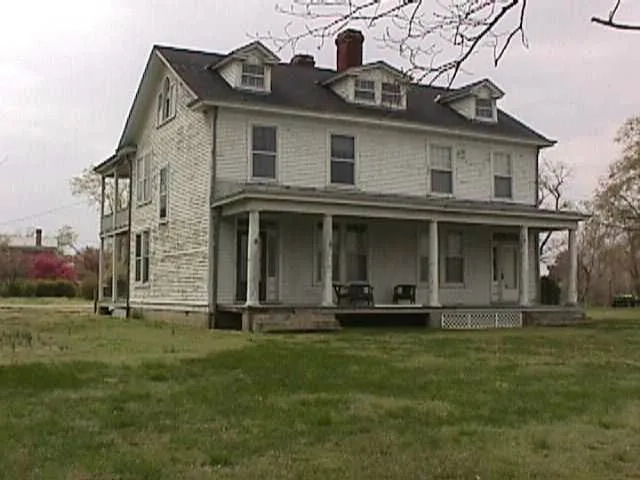
City Point occupies the tip of a small peninsula where the Appomattox and James rivers meet, in Hopewell, Virginia. The district covers about 39 acres across roughly seven blocks of minor residential streets, ringed by trees, a ravine and the open fields of Appomattox Manor. Most of its low-density housing dates from the 19th century, in Federal, Greek Revival, Gothic Revival and vernacular forms, mixed with Colonial and Georgian Revival examples. Notable buildings include Appomattox Manor, St. John's Episcopal Church of 1840, a Civil War Catholic chapel, the Cook House and the Christopher Proctor House of about 1800. Water Street once served wharves and, during the Civil War, warehouses for Union army supplies. Several houses were used as hospitals or quarters by Union forces. Many buildings have been altered with siding changes or apartment conversions, and some newer or modified structures do not fit the historic character. The district also includes early 20th-century bungalows and Baltimore Row, a block of thirteen brick row houses.
Machine-generated summary. This summary was generated by a language model from the official nomination document and has not been reviewed line by line by an editor. It may contain errors. Check the source document before relying on any detail. Source: nomination document (PDF) · catalog entry. Generated October 2026 (model claude-sonnet-5-5, prompt v1.0-2026-10-29).
| Styles | Mixed: Federal, Greek Revival, Gothic Revival, vernacular, Colonial Revival and Georgian Revival |
|---|---|
| Areas of significance | Commerce, Military, Exploration/Settlement, Politics/Government, Architecture |
| Acreage | 39 |
| Boundary source | NPS cultural-resource GIS polygon |
| Full listing page | City Point Historic District (property record) |
What listing means for this property
This is a historic district. Buildings within its boundary are either contributing (they add to the district's significance) or non-contributing. Owners of contributing income-producing buildings can claim the 20% federal rehabilitation tax credit; homeowners should look at state credits. National Register districts impose no design review by themselves; a local historic district ordinance, if one exists, does (the difference explained).
General information, not legal or tax advice. Rules change; confirm with your State Historic Preservation Office or a qualified adviser.