Chandler Court and Pollard Park Historic District (Additional Documentation)

The National Park Service has not published a boundary polygon for this district; the map shows the listed properties inside it and the district's reference point.
Why it's listed
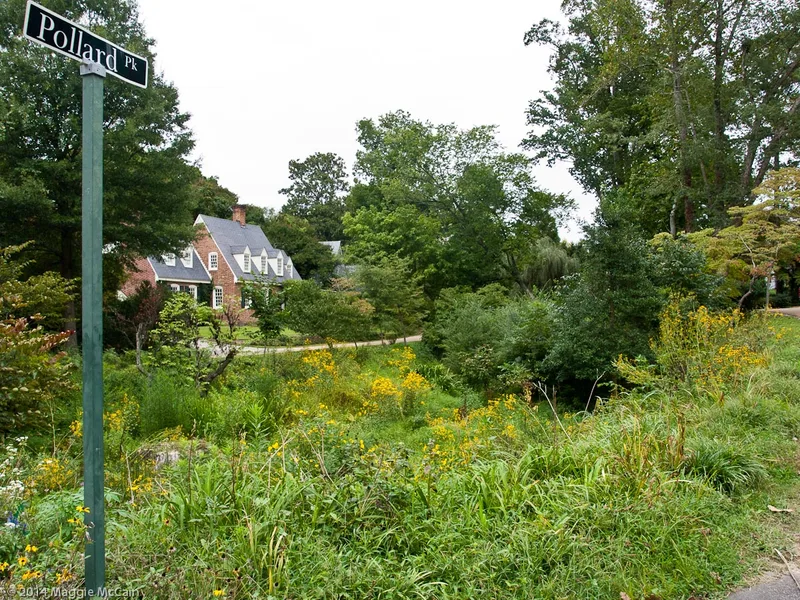
Chandler Court and Pollard Park form a small planned neighborhood across the street from the College of William and Mary in Williamsburg. Conceived by John Garland Pollard, a law professor who became Virginia governor in 1929, it combines freestanding houses on small lots with shared green spaces: an oval lawn at Chandler Court and a wooded ravine with a stream at Pollard Park. Brick-paved walks cross a sloping private lawn linking the two. The houses, built roughly between 1918 and 1940, trace a change in middle-class taste, from loosely interpreted Dutch Colonial, Arts and Crafts and Georgian forms to closer copies of eighteenth-century Chesapeake buildings. Architects, contractors and published plans all shaped the designs. Pollard intended housing for owners and renters of varied means, and rooms and apartments were let to faculty and students. Historians Earl Gregg Swem and Richard L. Morton lived here. The district is valued for its cohesive scale and its record of Colonial Revival design in Williamsburg.
Machine-generated summary. This summary was generated by a language model from the official nomination document and has not been reviewed line by line by an editor. It may contain errors. Check the source document before relying on any detail. Source: nomination document (PDF) · catalog entry. Generated October 2026 (model claude-sonnet-5-5, prompt v1.0-2026-10-29).
| Styles | 20th Century Revivals/Colonial Revival: Tudor Revival; 20th Century American Movements/Craftsman |
|---|---|
| Areas of significance | Landscape Architecture |
| Acreage | 7 |
| Boundary source | not published |
| Full listing page | Chandler Court and Pollard Park Historic District (Additional Documentation) (property record) |
What listing means for this property
This is a historic district. Buildings within its boundary are either contributing (they add to the district's significance) or non-contributing. Owners of contributing income-producing buildings can claim the 20% federal rehabilitation tax credit; homeowners should look at state credits. National Register districts impose no design review by themselves; a local historic district ordinance, if one exists, does (the difference explained).
General information, not legal or tax advice. Rules change; confirm with your State Historic Preservation Office or a qualified adviser.