Casanova Historic District

The National Park Service has not published a boundary polygon for this district; the map shows the listed properties inside it and the district's reference point.
Why it's listed
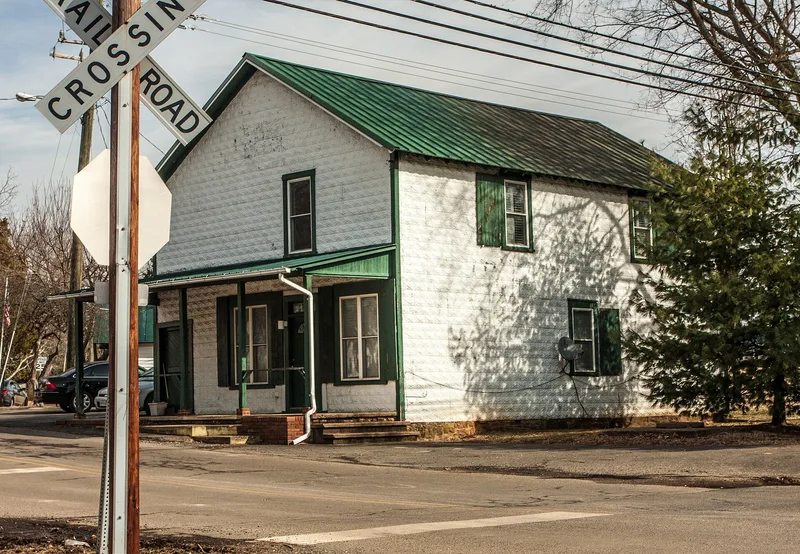
Casanova grew up in the 1850s where Rogues Road met the Warrenton Branch Railroad, a spur of the Orange and Alexandria line. It was first known as Three Mile Station. The historic district covers about 32 acres around the crossroads and contains 41 resources, 32 of them contributing. Most are frame dwellings from about 1880 to 1910, many of them I-houses with central front gables and Late Victorian detail. The oldest building is a two-story stone mill of 1879, built by local builder George Holtzclaw for the Wetmores. It made barrel staves until 1918 and became a house in 1947. Other landmarks include the 1906 Cowhig store, a Gothic Revival parish hall for Grace Episcopal Church, a Tudor Revival rectory, a former school, and a garage of roughly 12 by 18 feet that has housed the post office since 1956. Little modern construction has intruded, so the village keeps its early-20th-century character.
Machine-generated summary. This summary was generated by a language model from the official nomination document and has not been reviewed line by line by an editor. It may contain errors. Check the source document before relying on any detail. Source: nomination document (PDF) · catalog entry. Generated October 2026 (model claude-sonnet-5-5, prompt v1.0-2026-10-29).
| Period of significance | 1879-1955 |
|---|---|
| Styles | Gothic Revival; Other: I-house; Commercial |
| Areas of significance | Architecture |
| Acreage | 32 |
| Boundary source | not published |
| Full listing page | Casanova Historic District (property record) |
What listing means for this property
This is a historic district. Buildings within its boundary are either contributing (they add to the district's significance) or non-contributing. Owners of contributing income-producing buildings can claim the 20% federal rehabilitation tax credit; homeowners should look at state credits. National Register districts impose no design review by themselves; a local historic district ordinance, if one exists, does (the difference explained).
General information, not legal or tax advice. Rules change; confirm with your State Historic Preservation Office or a qualified adviser.