Camp Pendleton-State Military Reservation Historic District

Why it's listed
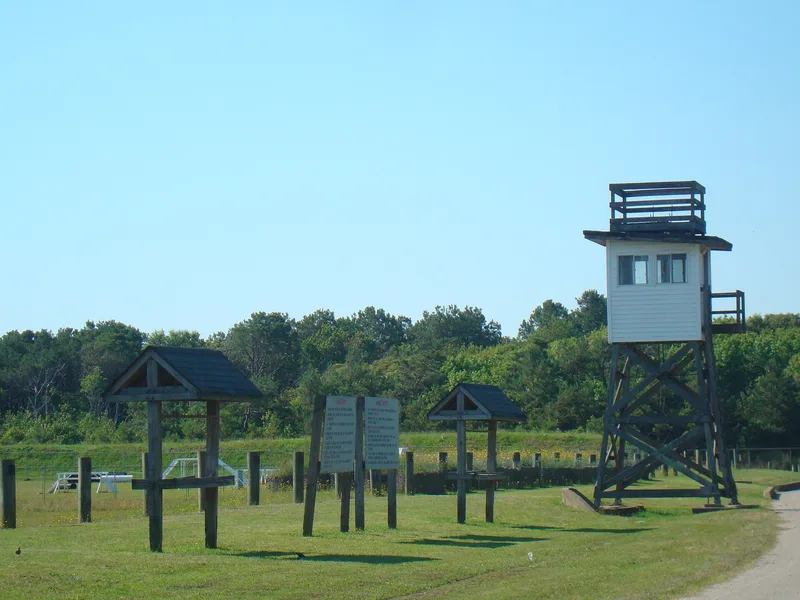
Camp Pendleton/State Military Reservation is a Virginia Army National Guard facility just south of the main resort area of Virginia Beach. It began as the State Rifle Range, laid out in 1911 with construction starting in 1912. Three major building campaigns shaped it. The first established the rifle range core, the U.S. Navy added buildings in 1919 during World War I, and the U.S. Army built the majority of the surviving structures during World War II, when the post was dedicated as Camp Pendleton. Those wartime buildings, including barracks and mess halls, follow Quartermaster Corps 700 Series drawings and were meant to be temporary, yet sixty-nine remain. Earlier resources include bungalows used as officers' housing, brick ammunition buildings, and concrete block support buildings. The post also held the first state-owned airfield in Virginia, which served civilian and military aircraft. The district includes 114 contributing resources, among them six sites such as the rifle ranges, drill field and cantonment roads.
Machine-generated summary. This summary was generated by a language model from the official nomination document and has not been reviewed line by line by an editor. It may contain errors. Check the source document before relying on any detail. Source: nomination document (PDF) · catalog entry. Generated October 2026 (model claude-sonnet-5-5, prompt v1.0-2026-10-29).
| Styles | Other/World War II Temporary Buildings; Other/World War I Buildings; Early 20th Century American Movements/Bungalow |
|---|---|
| Areas of significance | Architecture, Military, Transportation |
| Acreage | 328 |
| Boundary source | NPS cultural-resource GIS polygon |
| Full listing page | Camp Pendleton-State Military Reservation Historic District (property record) |
What listing means for this property
This is a historic district. Buildings within its boundary are either contributing (they add to the district's significance) or non-contributing. Owners of contributing income-producing buildings can claim the 20% federal rehabilitation tax credit; homeowners should look at state credits. National Register districts impose no design review by themselves; a local historic district ordinance, if one exists, does (the difference explained).
General information, not legal or tax advice. Rules change; confirm with your State Historic Preservation Office or a qualified adviser.