Cambria Historic District

Why it's listed
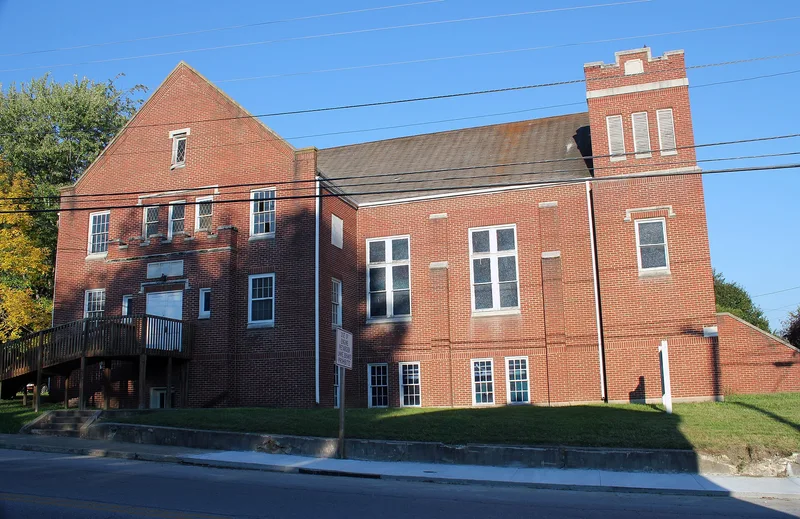
Cambria is a railroad-oriented neighborhood about a mile from downtown Christiansburg, on the north side of Zion Hill beside the Norfolk-Southern tracks along Crab Creek. Commercial buildings and houses surround a square that was reserved for public use in the 1860s. The earliest landmark is the 1869 Italianate depot, built of board-and-batten with a hip-roofed central tower. Opposite it stands the three-story brick Surface-Lee Block, built in 1908 as a wholesale grocery. The Dew Drop Inn, a pair of joined brick commercial buildings, housed the county's first hospital upstairs. Nearby are concrete-block commercial buildings from the 1920s, a 1928 Gothic-detailed Baptist church, a 1906 brick depot, Queen Anne and vernacular houses, and a small log house likely from the 1850s. The district was listed for architecture and for its role in the area's transportation and commerce between 1854 and 1930, when the railroad shaped the town's growth and its building forms.
Machine-generated summary. This summary was generated by a language model from the official nomination document and has not been reviewed line by line by an editor. It may contain errors. Check the source document before relying on any detail. Source: nomination document (PDF) · catalog entry. Generated October 2026 (model claude-sonnet-5-5, prompt v1.0-2026-10-29).
| Period of significance | 1854-1930 |
|---|---|
| Styles | Italianate, Queen Anne, Colonial Revival, Bungalow |
| Areas of significance | Commerce, Transportation, Architecture |
| Acreage | 34 |
| Boundary source | NPS cultural-resource GIS polygon |
| Full listing page | Cambria Historic District (property record) |
What listing means for this property
This is a historic district. Buildings within its boundary are either contributing (they add to the district's significance) or non-contributing. Owners of contributing income-producing buildings can claim the 20% federal rehabilitation tax credit; homeowners should look at state credits. National Register districts impose no design review by themselves; a local historic district ordinance, if one exists, does (the difference explained).
General information, not legal or tax advice. Rules change; confirm with your State Historic Preservation Office or a qualified adviser.