Cahas Mountain Rural Historic District

Why it's listed
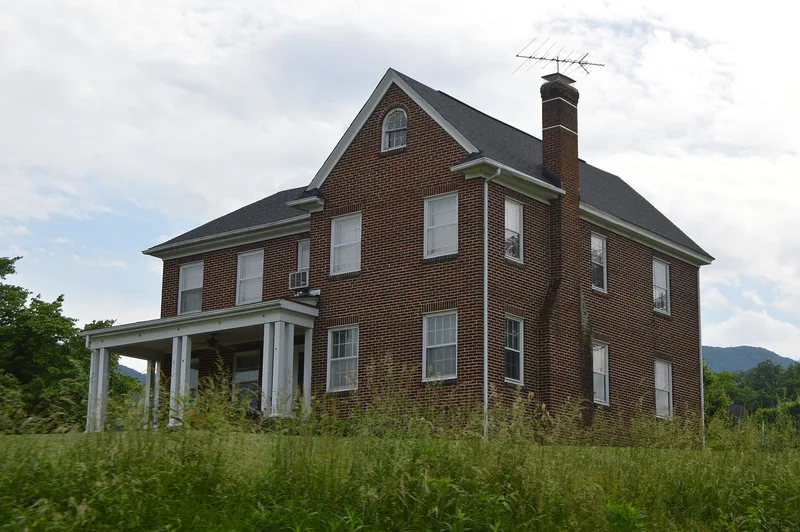
Cahas Mountain Rural Historic District covers about 1,450 acres of alluvial fields, rolling upland and forested ridge in north-central Franklin County, Virginia. Most historic buildings belong to four farms, the earliest being the Boon-Bernard Farm. Its main house, built in 1820 by John and Susan Boon, is a two-story Federal brick dwelling with Flemish-bond brickwork. The farm also has an antebellum log granary, a 1917 frame barn, tenant houses from the 1930s, and a 1906 store that once supplied the neighborhood and paid workers in scrip. Elsewhere in the district are the Taylor-Price House of about 1821, later houses of Boon descendants, abandoned log and boxed tenant houses, two family cemeteries with fieldstone markers believed to mark slave burials, and a well-preserved stretch of the Carolina Road. A one-room log tenant house has a log purlin roof, a form now extremely rare. The district was listed for its agriculture, architecture, commerce and transportation history, spanning about 1750 to 1945.
Machine-generated summary. This summary was generated by a language model from the official nomination document and has not been reviewed line by line by an editor. It may contain errors. Check the source document before relying on any detail. Source: nomination document (PDF) · catalog entry. Generated October 2026 (model claude-sonnet-5-5, prompt v1.0-2026-10-29).
| Period of significance | Ca. 1750-1945 |
|---|---|
| Styles | Federal, Greek Revival, Late Victorian, Colonial Revival, Craftsman, Modern Movement |
| Areas of significance | Commerce, Agriculture, Architecture, Transportation |
| Acreage | 1450 |
| Boundary source | NPS cultural-resource GIS polygon |
| Full listing page | Cahas Mountain Rural Historic District (property record) |
What listing means for this property
This is a historic district. Buildings within its boundary are either contributing (they add to the district's significance) or non-contributing. Owners of contributing income-producing buildings can claim the 20% federal rehabilitation tax credit; homeowners should look at state credits. National Register districts impose no design review by themselves; a local historic district ordinance, if one exists, does (the difference explained).
General information, not legal or tax advice. Rules change; confirm with your State Historic Preservation Office or a qualified adviser.