Buena Vista Downtown Historic District

Why it's listed
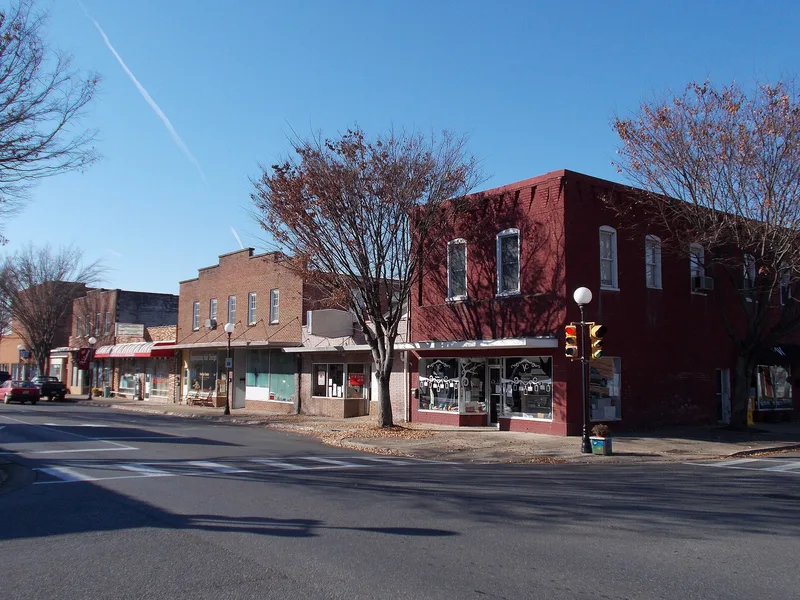
Downtown Buena Vista, Virginia, is a compact commercial district of about ten acres along Sycamore and Magnolia avenues, part of 21st Street, and short stretches of 20th Street and Forest Avenue. It sits on level river-bottom land east of the Maury River, with the Blue Ridge Mountains rising to the east. The district holds 53 resources, 39 of them contributing. Most are one- or two-story masonry buildings, with a few taller ones, among them a three-story 1890 hardware store that keeps its cast-iron storefront surround and faded painted advertising. Six surviving buildings date from the 1889-1890 boom, and others were built between 1900 and 1920 and between 1940 and 1959. Uses include banks, department and specialty stores, a post office, a war memorial building, and a former city hall. Details such as corbelled brickwork, pressed-metal cornices and large display windows are typical of the period. The district was listed for its architecture, commerce and government history from 1889 to 1959.
Machine-generated summary. This summary was generated by a language model from the official nomination document and has not been reviewed line by line by an editor. It may contain errors. Check the source document before relying on any detail. Source: nomination document (PDF) · catalog entry. Generated October 2026 (model claude-sonnet-5-5, prompt v1.0-2026-10-29).
| Period of significance | 1889-1959 |
|---|---|
| Styles | Second Empire, Classical Revival, Colonial Revival, Tudor Revival, Moderne |
| Areas of significance | Architecture, Commerce, Politics/Government |
| Acreage | 10 |
| Boundary source | NPS cultural-resource GIS polygon |
| Full listing page | Buena Vista Downtown Historic District (property record) |
What listing means for this property
This is a historic district. Buildings within its boundary are either contributing (they add to the district's significance) or non-contributing. Owners of contributing income-producing buildings can claim the 20% federal rehabilitation tax credit; homeowners should look at state credits. National Register districts impose no design review by themselves; a local historic district ordinance, if one exists, does (the difference explained).
General information, not legal or tax advice. Rules change; confirm with your State Historic Preservation Office or a qualified adviser.