Brownsburg Historic District

Why it's listed
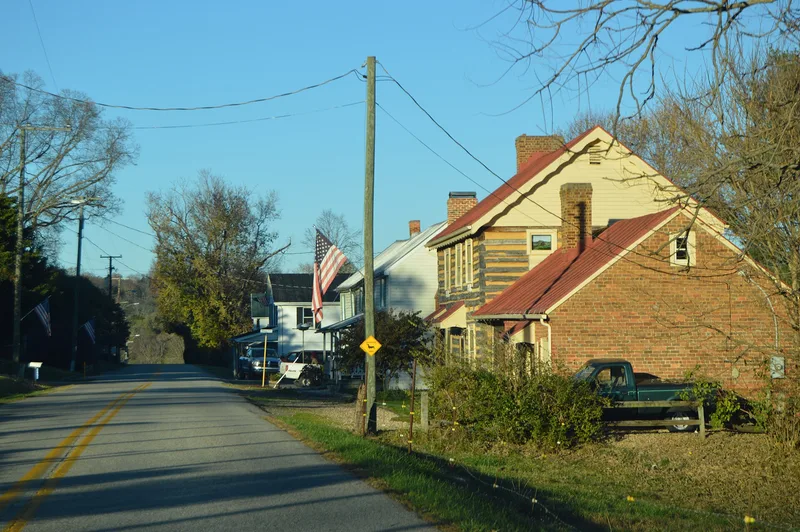
Brownsburg is a small village in Rockbridge County, Virginia, set above Hays Creek in the rolling hills of the Valley of Virginia. It was legally established in 1793 on land belonging to Robert Wardlaw and Samuel McChesney. By 1835 it had about twenty dwellings, three stores, two shoe factories, mills and a range of craft shops, and it was known for private schools in the nineteenth century. When the Baltimore and Ohio Railroad's Valley Branch and later U.S. Route 11 were built several miles east, commercial activity moved away. Most buildings date from the first half of the nineteenth century or from 1870 to 1910. Many are two-story frame or brick houses in a plain Valley Federal style, some with log cores under clapboard, and a few have crow-stepped gables. Today the village is mostly residential, and several former store-dwellings keep their early storefronts. Its lasting form and buildings are the basis for its listing as a local-level district of about 100 acres.
Machine-generated summary. This summary was generated by a language model from the official nomination document and has not been reviewed line by line by an editor. It may contain errors. Check the source document before relying on any detail. Source: nomination document (PDF) · catalog entry. Generated October 2026 (model claude-sonnet-5-5, prompt v1.0-2026-10-29).
| Styles | Valley Federal (vernacular), with later nineteenth-century frame houses |
|---|---|
| Areas of significance | Architecture, Social History |
| Acreage | 100 |
| Boundary source | NPS cultural-resource GIS polygon |
| Full listing page | Brownsburg Historic District (property record) |
What listing means for this property
This is a historic district. Buildings within its boundary are either contributing (they add to the district's significance) or non-contributing. Owners of contributing income-producing buildings can claim the 20% federal rehabilitation tax credit; homeowners should look at state credits. National Register districts impose no design review by themselves; a local historic district ordinance, if one exists, does (the difference explained).
General information, not legal or tax advice. Rules change; confirm with your State Historic Preservation Office or a qualified adviser.