Broad Run Bridge and Tollhouse

The National Park Service has not published a boundary polygon for this district; the map shows the listed properties inside it and the district's reference point.
Why it's listed
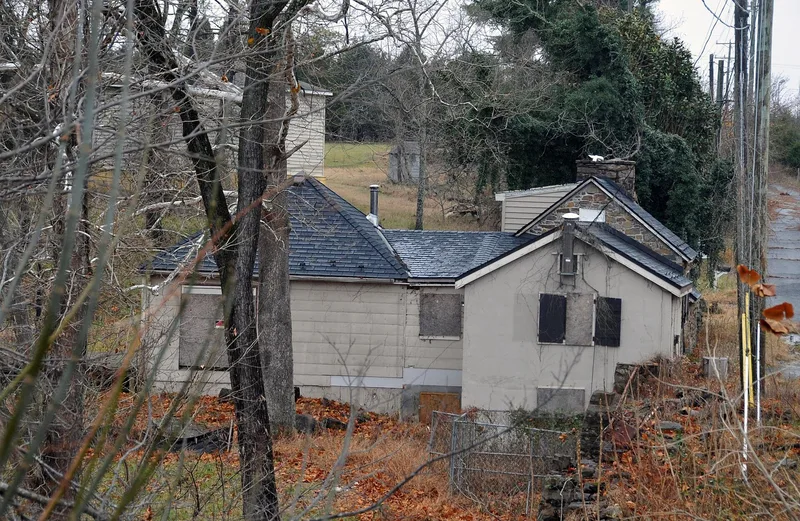
Broad Run Bridge and Toll House sit where Routes 7 and 28 meet Broad Run, near Sterling in Loudoun County. The stone bridge has two arches carried on a central pier and heavy abutments, with conical buttressing at the arches and a low parapet along the roadway. The stone toll house stands at the western end on the south side. It began as a one-story, three-bay building and was later enlarged with three wings, though the old walls remain largely intact. Both were part of the Leesburg Turnpike, chartered in 1809. A stone reputedly dated 1820 suggests the likely construction date, replacing at least three earlier wooden bridges that washed away. The stone bridge carried traffic until 1949, and the road ceased to be a toll road at the start of the Civil War. The property was listed as one of several surviving stone bridges in Virginia and probably the only such bridge paired with a toll house. The toll house is now a private residence. A June 1972 flood damaged the causeway.
Machine-generated summary. This summary was generated by a language model from the official nomination document and has not been reviewed line by line by an editor. It may contain errors. Check the source document before relying on any detail. Source: nomination document (PDF) · catalog entry. Generated October 2026 (model claude-sonnet-5-5, prompt v1.0-2026-10-29).
| Period of significance | 19th Century |
|---|---|
| Areas of significance | Commerce, Transportation |
| Acreage | 9.9 |
| Boundary source | not published |
| Full listing page | Broad Run Bridge and Tollhouse (property record) |
What listing means for this property
This is a historic district. Buildings within its boundary are either contributing (they add to the district's significance) or non-contributing. Owners of contributing income-producing buildings can claim the 20% federal rehabilitation tax credit; homeowners should look at state credits. National Register districts impose no design review by themselves; a local historic district ordinance, if one exists, does (the difference explained).
General information, not legal or tax advice. Rules change; confirm with your State Historic Preservation Office or a qualified adviser.