Bristol Commercial Historic District (Boundary Increase)

The National Park Service has not published a boundary polygon for this district; the map shows the listed properties inside it and the district's reference point.
Why it's listed
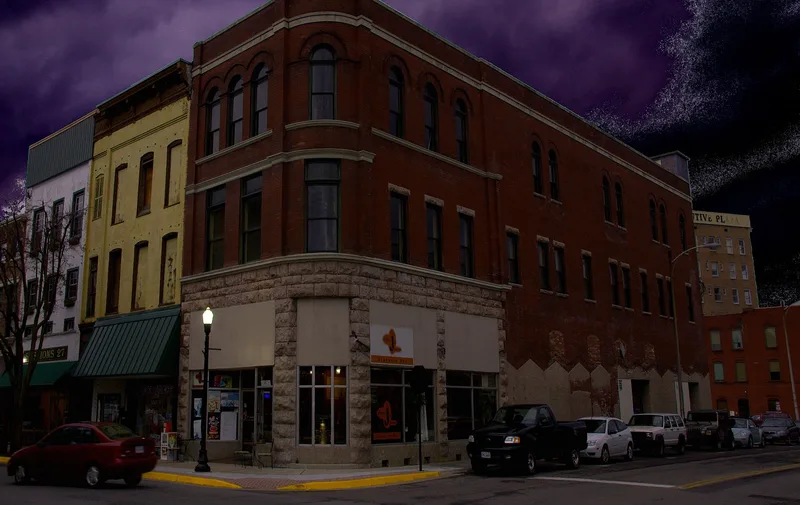
Downtown Bristol, which straddles the Tennessee-Virginia line, is documented here as a commercial and industrial district centered on State Street. After the Civil War the town grew around its railroad, and by 1900 many frame stores were being replaced by two- and three-story brick buildings. Between 1900 and 1930 a building boom produced most of the surviving downtown, including Beaux-Arts banks and a post office, department stores, Brick Front shops, garages, warehouses and a seven-story office building, the Reynolds Arcade of 1925. Architect Clarence B. Kearfott designed many of these buildings. Later additions include the Art Deco Paramount Theatre of 1930 and Art Moderne storefronts and a furniture store from the late 1930s. Building slowed during the Depression and World War II, then resumed in the 1940s. The district is recognized for its role as a regional commercial center and for its range of commercial architecture from about 1885 to 1952. Many buildings still serve business uses today.
Machine-generated summary. This summary was generated by a language model from the official nomination document and has not been reviewed line by line by an editor. It may contain errors. Check the source document before relying on any detail. Source: nomination document (PDF). Generated October 2026 (model claude-sonnet-5-5, prompt v1.0-2026-10-29).
| Period of significance | Ca. 1885 - 1952 |
|---|---|
| Styles | Late 19th & Early 20th Century American Movements/Commercial Style; Late 19th & Early 20th Century Revivals/Beaux Arts/Colonial Revival; Modern Movement/Art Deco/Art Moderne |
| Areas of significance | Architecture, Commerce |
| Acreage | 3.3 |
| Boundary source | not published |
| Full listing page | Bristol Commercial Historic District (Boundary Increase) (property record) |
What listing means for this property
This is a historic district. Buildings within its boundary are either contributing (they add to the district's significance) or non-contributing. Owners of contributing income-producing buildings can claim the 20% federal rehabilitation tax credit; homeowners should look at state credits. National Register districts impose no design review by themselves; a local historic district ordinance, if one exists, does (the difference explained).
General information, not legal or tax advice. Rules change; confirm with your State Historic Preservation Office or a qualified adviser.