Boyce Historic District

Why it's listed
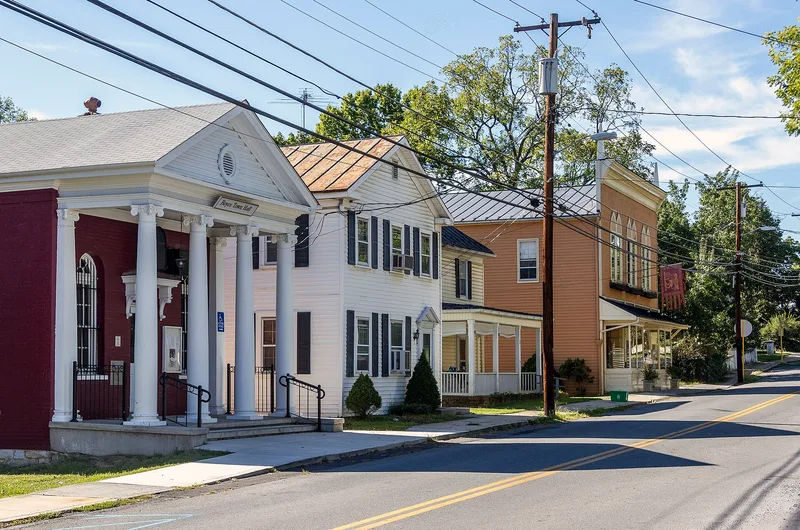
Boyce, in southern Clarke County, Virginia, began in 1880 where the new Shenandoah Valley Railroad crossed the turnpike between the Shenandoah River and Winchester. It was first called Boyceville and was incorporated as Boyce in 1910. The historic district covers about 102 acres and includes dwellings with their outbuildings, commercial buildings near the tracks, four churches, three school buildings and a train station. Most of the 154 contributing buildings date from about 1880 to 1920. Many are vernacular frame I-houses on stone foundations, while a few show Queen Anne, Gothic Revival, Classical Revival or Craftsman styling. Early commercial buildings beside the railroad carry more decoration than the houses of the same period. The district also preserves resources tied to the town's African-American community, including the 1885 Boyce Colored School and Mount Zion Baptist Church. The district was listed for its architecture, as a well-preserved record of a railroad town's growth.
Machine-generated summary. This summary was generated by a language model from the official nomination document and has not been reviewed line by line by an editor. It may contain errors. Check the source document before relying on any detail. Source: nomination document (PDF) · catalog entry. Generated October 2026 (model claude-sonnet-5-5, prompt v1.0-2026-10-29).
| Period of significance | 1880-1953 |
|---|---|
| Styles | Late Victorian (Queen Anne, Second Gothic Revival); Late 19th and 20th Century Revivals (Classical Revival); Bungalow/Craftsman; I-house |
| Areas of significance | Architecture |
| Acreage | 102 |
| Boundary source | NPS cultural-resource GIS polygon |
| Full listing page | Boyce Historic District (property record) |
What listing means for this property
This is a historic district. Buildings within its boundary are either contributing (they add to the district's significance) or non-contributing. Owners of contributing income-producing buildings can claim the 20% federal rehabilitation tax credit; homeowners should look at state credits. National Register districts impose no design review by themselves; a local historic district ordinance, if one exists, does (the difference explained).
General information, not legal or tax advice. Rules change; confirm with your State Historic Preservation Office or a qualified adviser.