Bon Air Historic District

Why it's listed
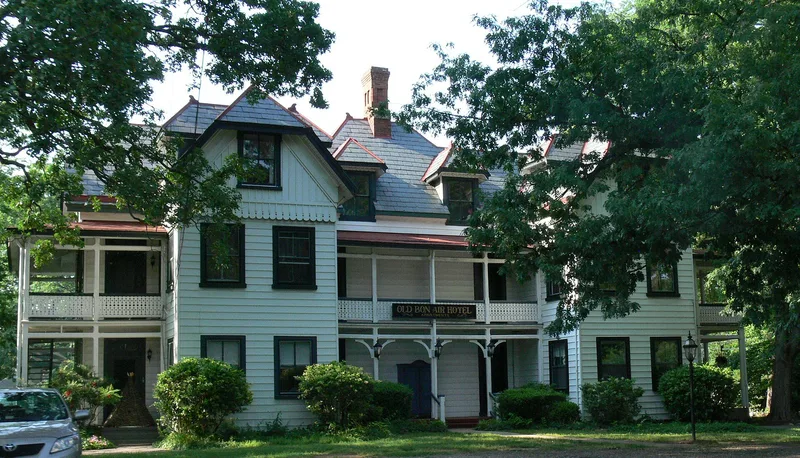
Bon Air is a small village-scale district of 112 buildings near Richmond, laid out in the early 1880s by the Bon Air Land and Improvement Company as a summer refuge for city residents. Its location near Richmond, pleasant climate and rail access made it a popular resort. Buford Road holds the earliest summer cottages, mostly Stick-style houses from the 1880s and 1890s, alongside Queen Anne and Colonial Revival dwellings. Side streets contain smaller early twentieth-century frame houses, including Bungalow and American Foursquare types. The Bon Air Hotel burned in 1889, but its Stick-style annex survives, along with a Victorian Gothic church of 1882, a granite library of 1902 and a post office of 1916. The Bon Air Inn of 1894 was later divided and its sections moved and remodeled as houses. As automobiles and better train service arrived, the resort gave way to year-round suburban living. Together these buildings document that change from resort to suburb.
Machine-generated summary. This summary was generated by a language model from the official nomination document and has not been reviewed line by line by an editor. It may contain errors. Check the source document before relying on any detail. Source: nomination document (PDF) · catalog entry. Generated October 2026 (model claude-sonnet-5-5, prompt v1.0-2026-10-29).
| Styles | Late Victorian; Late 19th- and 20th-Century Revivals (Stick, Queen Anne, Colonial Revival, Bungalow, American Foursquare) |
|---|---|
| Areas of significance | Entertainment/Recreation, Architecture |
| Acreage | 105 |
| Boundary source | NPS cultural-resource GIS polygon |
| Full listing page | Bon Air Historic District (property record) |
What listing means for this property
This is a historic district. Buildings within its boundary are either contributing (they add to the district's significance) or non-contributing. Owners of contributing income-producing buildings can claim the 20% federal rehabilitation tax credit; homeowners should look at state credits. National Register districts impose no design review by themselves; a local historic district ordinance, if one exists, does (the difference explained).
General information, not legal or tax advice. Rules change; confirm with your State Historic Preservation Office or a qualified adviser.