Belmont

Why it's listed
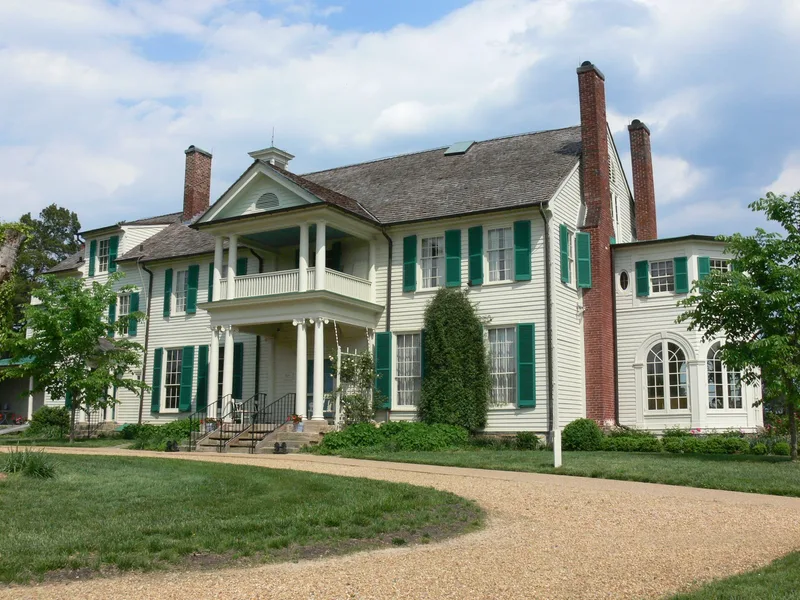
Belmont is a two-story white frame house in Falmouth, Virginia, set on about 27 acres above the Rappahannock River. John Dixon of Williamsburg built it around 1761. Joseph Ficklin bought it in 1825, enlarged the central part and added a wing, and his family held it until 1916. In that year the painter Gari Melchers purchased the estate and added a studio wing, later building a large stone studio. He lived there until his death in 1932. Melchers is best known for the murals "Peace" and "War" in the Library of Congress, and he helped gain European recognition for American art. His widow gave the property to the Commonwealth of Virginia, and Mary Washington College operates it. The stone studio holds many of his paintings, and the house remains structurally as it was in his time apart from a small sunporch. Several outbuildings date from his years, while some across the road are in disrepair.
Machine-generated summary. This summary was generated by a language model from the official nomination document and has not been reviewed line by line by an editor. It may contain errors. Check the source document before relying on any detail. Source: nomination document (PDF) · catalog entry. Generated October 2026 (model claude-sonnet-5-5, prompt v1.0-2026-10-29).
| Period of significance | 1916-1932 |
|---|---|
| Areas of significance | Art |
| Acreage | 27 |
| Boundary source | NPS cultural-resource GIS polygon |
| Full listing page | Belmont (property record) |
What listing means for this property
This is a historic district. Buildings within its boundary are either contributing (they add to the district's significance) or non-contributing. Owners of contributing income-producing buildings can claim the 20% federal rehabilitation tax credit; homeowners should look at state credits. National Register districts impose no design review by themselves; a local historic district ordinance, if one exists, does (the difference explained).
General information, not legal or tax advice. Rules change; confirm with your State Historic Preservation Office or a qualified adviser.