Bellevue Rural Historic District (Additional Documentation)

Why it's listed
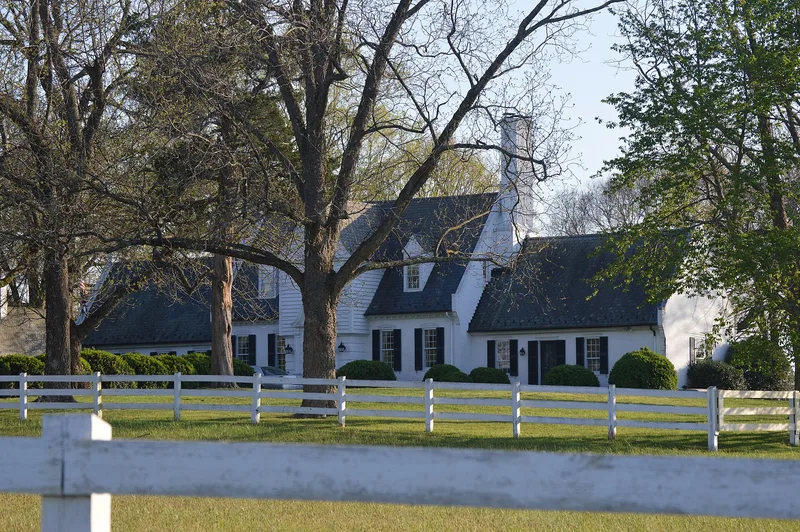
Bellevue Rural Historic District covers about 411 acres along a one-mile stretch of Bellevue Road in eastern Bedford County, Virginia. Four linked farm properties make up its core: Bellevue, Trivium, Brook Hill Farm and Glenn Mary Farm. Buildings date from 1790 to 1939 and include a brick Federal house, a Greek Revival tavern built in 1832, a 1904 Queen Anne and bungalow dwelling, and a 1939 Colonial Revival brick farmhouse. Open fields and a narrow tree-lined road, once a buggy path, connect the farms. The district was listed for its agricultural history, its architecture and its role in education. James P. Holcombe, a Confederate congressman and University of Virginia law professor, opened Bellevue School for Boys in 1866, and it drew students from across the South until it closed in 1909. Brook Hill Farm also kept a small private schoolhouse for resident children. Today the farms are used mainly for cattle, horses and hay.
Machine-generated summary. This summary was generated by a language model from the official nomination document and has not been reviewed line by line by an editor. It may contain errors. Check the source document before relying on any detail. Source: nomination document (PDF) · catalog entry. Generated October 2026 (model claude-sonnet-5-5, prompt v1.0-2026-10-29).
| Period of significance | 1790 - 1939 |
|---|---|
| Styles | Early Republic/Federal; Colonial/Jacobean; Greek Revival; Late Victorian/Queen Anne; Bungalow/Craftsman |
| Areas of significance | Agriculture, Architecture, Education |
| Acreage | 411.2 |
| Boundary source | NPS cultural-resource GIS polygon |
| Full listing page | Bellevue Rural Historic District (Additional Documentation) (property record) |
What listing means for this property
This is a historic district. Buildings within its boundary are either contributing (they add to the district's significance) or non-contributing. Owners of contributing income-producing buildings can claim the 20% federal rehabilitation tax credit; homeowners should look at state credits. National Register districts impose no design review by themselves; a local historic district ordinance, if one exists, does (the difference explained).
General information, not legal or tax advice. Rules change; confirm with your State Historic Preservation Office or a qualified adviser.