Bear's Den Rural Historic District

Why it's listed
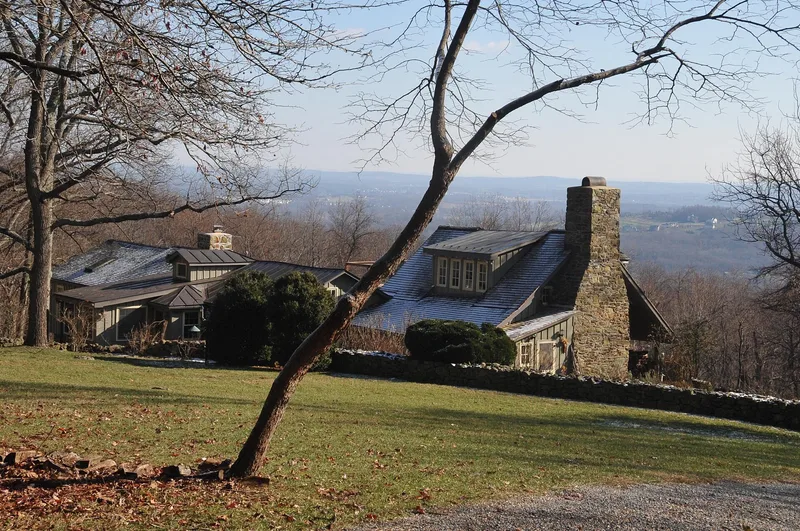
Along the crest of the Blue Ridge near Snicker's Gap, this rural district covers roughly 1,855 acres, mostly in Clarke County with a part in Loudoun County. It contains 66 properties and 231 resources, including 152 contributing buildings, mainly dwellings and their outbuildings. Most were built as summer homes by affluent Washingtonians drawn by the cooler climate and long views over the Shenandoah Valley and the Piedmont. Development began in the 1890s and grew sharply after a railroad reached nearby Bluemont around 1900. Native greenstone granite gives the houses a rustic look and also forms the extensive stone walls and gateposts. Styles include Craftsman, Colonial Revival, Queen Anne and several eclectic revivals. Notable properties include Joannasberg, built in 1897 by travel writer Frank Carpenter, High Meadows, Eagle Rock Farm, Seltsenhorst and Bruce Farm. A former hotel, school and church also stand in the district. Many original owners were neighbors and acquaintances from Georgetown.
Machine-generated summary. This summary was generated by a language model from the official nomination document and has not been reviewed line by line by an editor. It may contain errors. Check the source document before relying on any detail. Source: nomination document (PDF) · catalog entry. Generated October 2026 (model claude-sonnet-5-5, prompt v1.0-2026-10-29).
| Styles | Queen Anne, Colonial Revival, Tudor Revival, Late Gothic Revival, French Eclectic, Spanish Eclectic, Bungalow/Craftsman, Ranch, Minimal Traditional, and Vernacular |
|---|---|
| Areas of significance | Architecture, Social History |
| Acreage | 1855 |
| Boundary source | NPS cultural-resource GIS polygon |
| Full listing page | Bear's Den Rural Historic District (property record) |
What listing means for this property
This is a historic district. Buildings within its boundary are either contributing (they add to the district's significance) or non-contributing. Owners of contributing income-producing buildings can claim the 20% federal rehabilitation tax credit; homeowners should look at state credits. National Register districts impose no design review by themselves; a local historic district ordinance, if one exists, does (the difference explained).
General information, not legal or tax advice. Rules change; confirm with your State Historic Preservation Office or a qualified adviser.