Bear Creek Lake State Park

Why it's listed
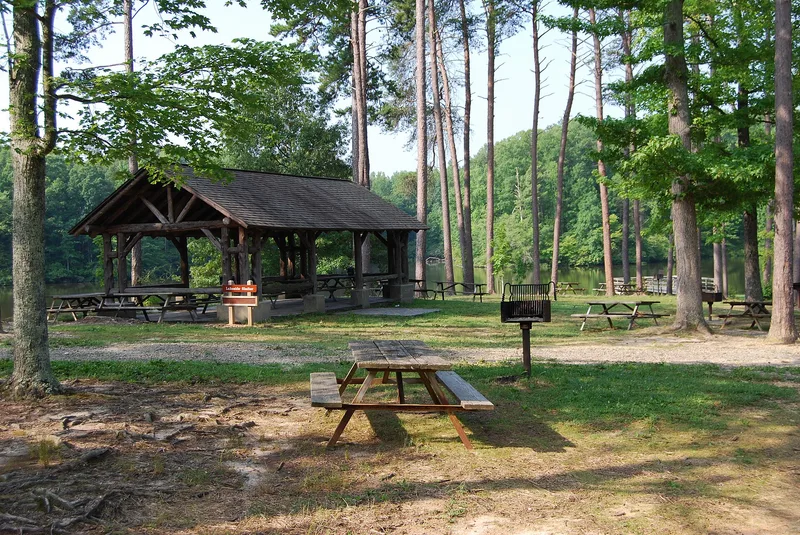
Bear Creek Lake State Park occupies nearly 329 acres of upland forest in Cumberland County, Virginia, inside the 16,000-acre Cumberland State Forest. Its focus is a manmade lake with a beach, picnic areas, campgrounds, cabins, trails and a meeting facility. The park began in the Great Depression as one of four recreational development areas created by the Virginia Division of Forestry, with labor from the Civilian Conservation Corps and Works Progress Administration. Although it did not follow the strict design standards used in the National Park Service-designed state parks, it shows their influence in its long entry drive, central water feature and structures built of natural materials. Contributing resources include log picnic shelters, stone fireplace grills, well houses, a slate culvert, a drain tower, the road and trail system, and the 1938 dam and rubble-stone spillway. Later buildings, including the cabins and lodge built in 2007, are counted as noncontributing.
Machine-generated summary. This summary was generated by a language model from the official nomination document and has not been reviewed line by line by an editor. It may contain errors. Check the source document before relying on any detail. Source: nomination document (PDF) · catalog entry. Generated October 2026 (model claude-sonnet-5-5, prompt v1.0-2026-10-29).
| Styles | Other/Rustic; Other/Post-Modern |
|---|---|
| Areas of significance | Architecture, Entertainment/Recreation, Landscape Architecture |
| Acreage | 329 |
| Boundary source | NPS cultural-resource GIS polygon |
| Full listing page | Bear Creek Lake State Park (property record) |
What listing means for this property
This is a historic district. Buildings within its boundary are either contributing (they add to the district's significance) or non-contributing. Owners of contributing income-producing buildings can claim the 20% federal rehabilitation tax credit; homeowners should look at state credits. National Register districts impose no design review by themselves; a local historic district ordinance, if one exists, does (the difference explained).
General information, not legal or tax advice. Rules change; confirm with your State Historic Preservation Office or a qualified adviser.