Batesville Historic District

Why it's listed
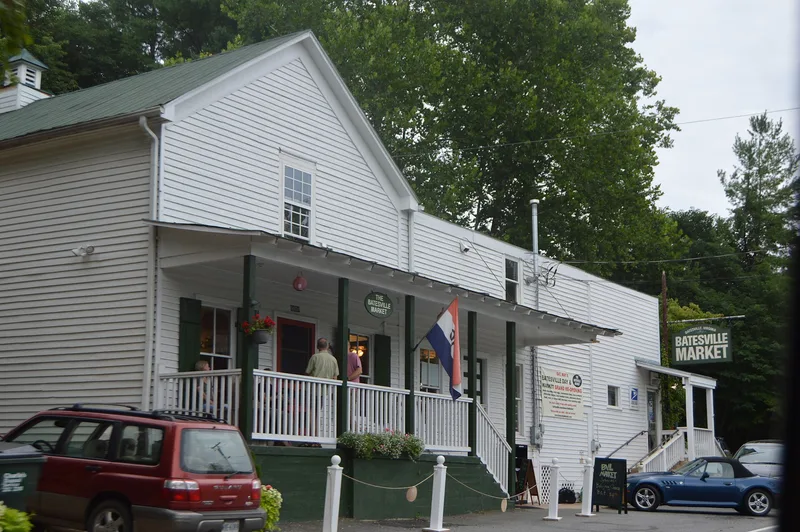
Batesville is a small crossroads community in Albemarle County, Virginia, where County Routes 692 (Plank Road) and 635 meet. Its buildings line both roads in a linear pattern between ridges to the north and south. The district holds 44 buildings, of which 33 contribute to its character. Dwellings range from the early nineteenth century, including the Federal-style Walters-Page House of about 1800 and a log house, to simple Folk National and Folk Victorian frame houses. Two brick Greek Revival churches, Mount Ed Baptist and Batesville Methodist, date to the mid-nineteenth century. Commercial buildings such as Page's Store, the Colonial Revival house Castlebrook and the Classical Revival Batesville Elementary School of 1922 represent later growth. Most buildings remain in good condition with few alterations, and few intrusions have occurred. The district was listed because it is one of the earliest surviving crossroads communities in the county and shows development from the early 1800s through the 1920s and 1930s.
Machine-generated summary. This summary was generated by a language model from the official nomination document and has not been reviewed line by line by an editor. It may contain errors. Check the source document before relying on any detail. Source: nomination document (PDF) · catalog entry. Generated October 2026 (model claude-sonnet-5-5, prompt v1.0-2026-10-29).
| Styles | Federal, Greek Revival, Colonial Revival, Classical Revival, Folk National, Folk Victorian |
|---|---|
| Areas of significance | Architecture, Transportation, Commerce |
| Acreage | 135 |
| Boundary source | NPS cultural-resource GIS polygon |
| Full listing page | Batesville Historic District (property record) |
What listing means for this property
This is a historic district. Buildings within its boundary are either contributing (they add to the district's significance) or non-contributing. Owners of contributing income-producing buildings can claim the 20% federal rehabilitation tax credit; homeowners should look at state credits. National Register districts impose no design review by themselves; a local historic district ordinance, if one exists, does (the difference explained).
General information, not legal or tax advice. Rules change; confirm with your State Historic Preservation Office or a qualified adviser.