Barnard Farm

Why it's listed
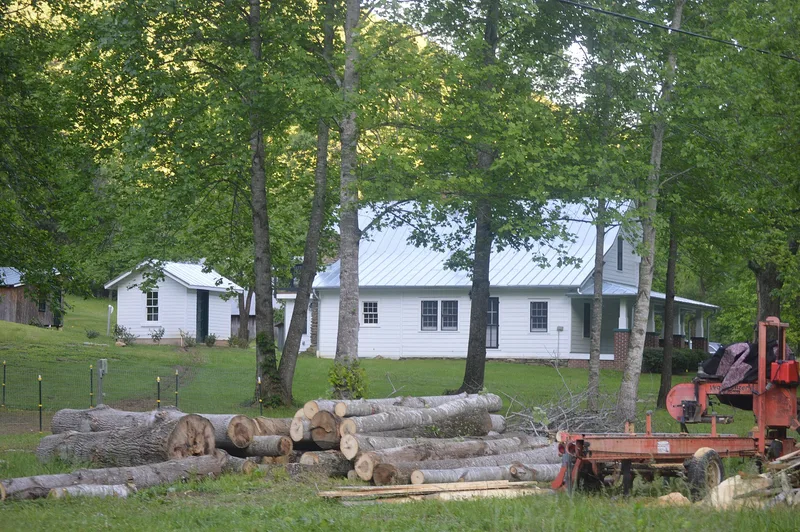
Barnard Farm is a farm district of about 155 acres in the Kibler Valley of western Patrick County, Virginia, spanning both sides of the Dan River and Kibler Valley Road. Its center is the Barnard House, a two-story half-dovetail-notched log dwelling thought to date to about 1829, when Isham Barnard acquired the tract. Frame additions followed around 1851 and in the 1930s, when the house was reoriented and given a Craftsman porch. Inside, grained two-panel doors and a marbled mantel reflect a Greek Revival character and a painted-finish tradition known in nearby North Carolina. A curved, chamfered log bracket supporting the projecting plate is described as apparently undocumented in the region. The farm also holds a granary, garage, post office, early 1950s store, spring house, cellar, corn mill, barns, two tenant houses and the Barnard Cemetery. Sixteen of its seventeen resources contribute to the district, showing how a family farm and small commercial center developed from the nineteenth century to the 1950s.
Machine-generated summary. This summary was generated by a language model from the official nomination document and has not been reviewed line by line by an editor. It may contain errors. Check the source document before relying on any detail. Source: nomination document (PDF) · catalog entry. Generated October 2026 (model claude-sonnet-5-5, prompt v1.0-2026-10-29).
| Styles | Greek Revival; Craftsman |
|---|---|
| Areas of significance | Architecture |
| Acreage | 155 |
| Boundary source | NPS cultural-resource GIS polygon |
| Full listing page | Barnard Farm (property record) |
What listing means for this property
This is a historic district. Buildings within its boundary are either contributing (they add to the district's significance) or non-contributing. Owners of contributing income-producing buildings can claim the 20% federal rehabilitation tax credit; homeowners should look at state credits. National Register districts impose no design review by themselves; a local historic district ordinance, if one exists, does (the difference explained).
General information, not legal or tax advice. Rules change; confirm with your State Historic Preservation Office or a qualified adviser.