Aurora Highlands Historic District

The National Park Service has not published a boundary polygon for this district; the map shows the listed properties inside it and the district's reference point.
Why it's listed
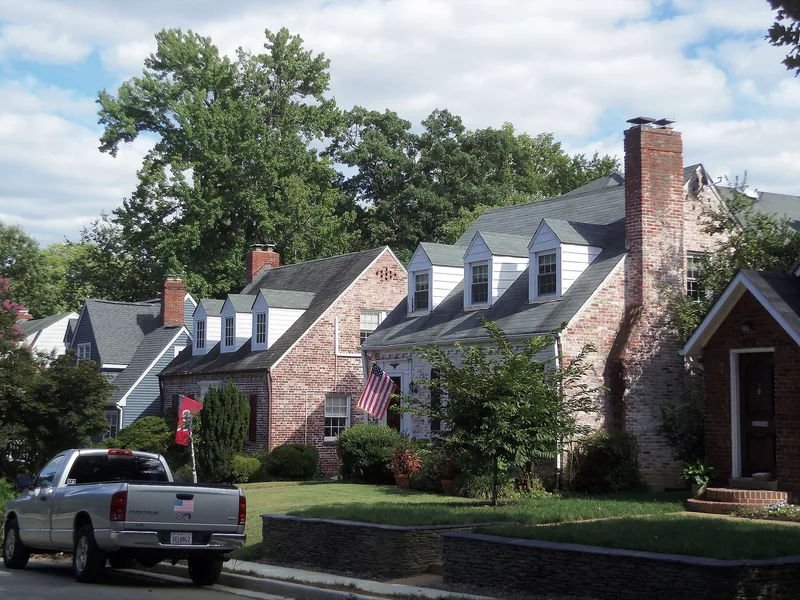
Aurora Highlands is a 128-acre residential neighborhood in southern Arlington County, Virginia, laid out on a regular grid a few miles from Washington, D.C. It grew from three subdivisions platted between 1896 and 1930: Addison Heights, Aurora Hills and Virginia Highlands. Two dwellings from around 1870 and 1880 predate the first subdivision. Most houses were built between 1911 and 1940, many as Craftsman bungalows. The area also holds seven concrete-block houses built in 1910 by architect Milton Dana Morrill, and seven houses identified as Sears, Roebuck and Company mail-order kits. Colonial Revival, Tudor Revival and mid-century Modern Movement buildings add variety, along with churches, schools, parks and a small commercial strip on 23rd Street South. The district was listed for its architecture and for what it shows about planned suburban development, which accelerated during both World Wars as middle-class families sought housing near the capital. Despite replacement materials and additions, its overall integrity remains largely intact.
Machine-generated summary. This summary was generated by a language model from the official nomination document and has not been reviewed line by line by an editor. It may contain errors. Check the source document before relying on any detail. Source: nomination document (PDF) · catalog entry. Generated October 2026 (model claude-sonnet-5-5, prompt v1.0-2026-10-29).
| Period of significance | circa 1870-1957 |
|---|---|
| Styles | Greek Revival, Italianate, Colonial Revival, Tudor Revival, Mission/Spanish Colonial Revival, Bungalow/Craftsman, Moderne |
| Areas of significance | Architecture, Community Planning and Development |
| Acreage | 128.8 |
| Boundary source | not published |
| Full listing page | Aurora Highlands Historic District (property record) |
What listing means for this property
This is a historic district. Buildings within its boundary are either contributing (they add to the district's significance) or non-contributing. Owners of contributing income-producing buildings can claim the 20% federal rehabilitation tax credit; homeowners should look at state credits. National Register districts impose no design review by themselves; a local historic district ordinance, if one exists, does (the difference explained).
General information, not legal or tax advice. Rules change; confirm with your State Historic Preservation Office or a qualified adviser.