Appomattox Court House National Historical Park

Why it's listed
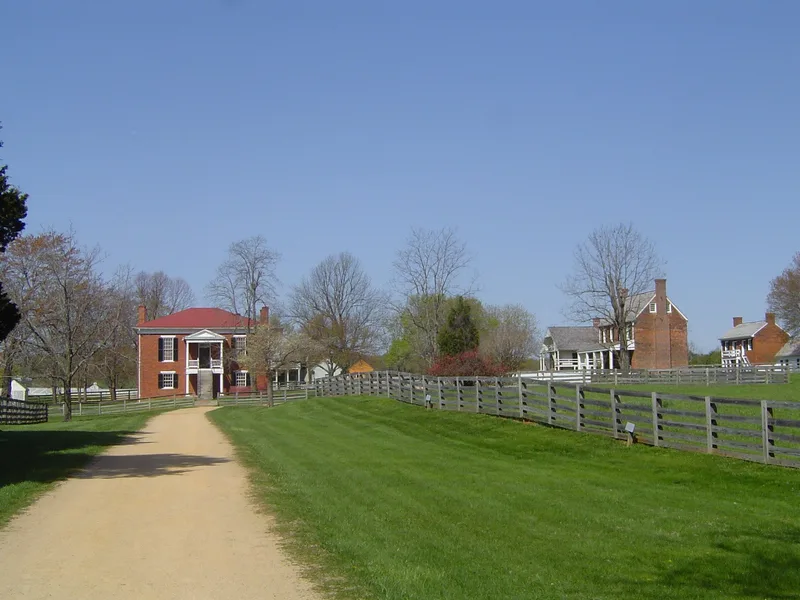
Appomattox Court House is a restored rural Virginia village and 1,325-acre landscape of fields and woodland in the piedmont, three miles northeast of the town of Appomattox. It marks the place where Confederate General Robert E. Lee surrendered the Army of Northern Virginia to Union Lieutenant General Ulysses S. Grant on April 9, 1865. Thirteen restored and fourteen reconstructed buildings cluster around the courthouse, including the Clover Hill Tavern, built in 1819, and the Mariah Wright House, built in 1823. The buildings range from small log cabins to the homes of prosperous judges and court officials. Surrounding roads, fences, hedgerows and farm fields recall the village as it appeared in 1865-1870. Sites tied to the surrender, such as the Surrender Triangle, the headquarters sites of both generals and the site of the last battle, are also included, along with a 1905 North Carolina monument. The park is recognized for both its military history and its preserved community landscape.
Machine-generated summary. This summary was generated by a language model from the official nomination document and has not been reviewed line by line by an editor. It may contain errors. Check the source document before relying on any detail. Source: nomination document (PDF) · catalog entry. Generated October 2026 (model claude-sonnet-5-5, prompt v1.0-2026-10-29).
| Styles | Vernacular rural Virginia buildings, including log cabins, with Greek Revival and Georgian-influenced details |
|---|---|
| Areas of significance | Conservation, Military, Architecture |
| Acreage | 1325.1 |
| Boundary source | NPS cultural-resource GIS polygon |
| Full listing page | Appomattox Court House National Historical Park (property record) |
What listing means for this property
This is a historic district. Buildings within its boundary are either contributing (they add to the district's significance) or non-contributing. Owners of contributing income-producing buildings can claim the 20% federal rehabilitation tax credit; homeowners should look at state credits. National Register districts impose no design review by themselves; a local historic district ordinance, if one exists, does (the difference explained).
General information, not legal or tax advice. Rules change; confirm with your State Historic Preservation Office or a qualified adviser.