Altavista Downtown Historic District

Why it's listed
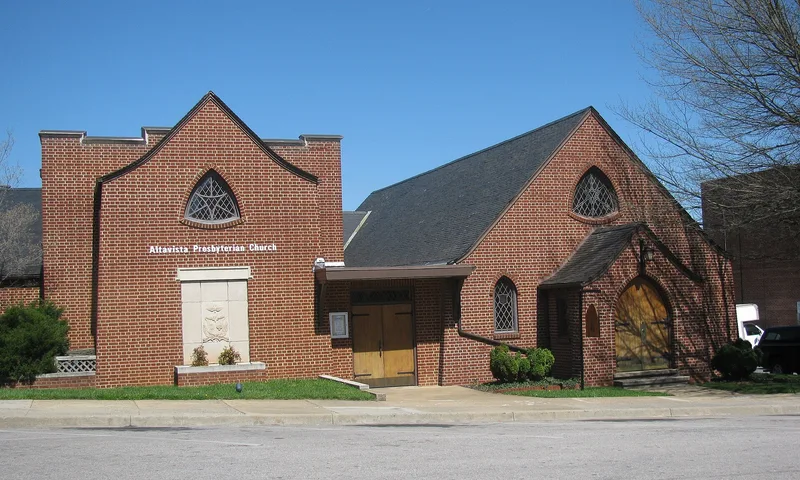
Altavista's downtown district covers about 14 acres of the original commercial and governmental center of a town planned in the early twentieth century. The Lane Brothers Construction Company bought land near the meeting of the Southern and Virginian railways in 1905, and the town plat was approved in 1908. That grid of streets, lots and alleys still defines the district. Most of its 48 contributing buildings are one- or two-story masonry commercial blocks with brick facades, storefronts with plate glass, pressed metal cornices and decorative brickwork. Notable buildings include the 1909 Ogden-Henderson Building, the First National Bank designed by Stanhope Johnson, the 1938 Colonial Revival town hall by Samuel P. Craighill, a 1938 post office, two churches from the 1920s, and the railroad depots and service stations. The district is significant as the intact core of a planned industrial town where zoning kept commerce between the rail lines and factories on the east side.
Machine-generated summary. This summary was generated by a language model from the official nomination document and has not been reviewed line by line by an editor. It may contain errors. Check the source document before relying on any detail. Source: nomination document (PDF) · catalog entry. Generated October 2026 (model claude-sonnet-5-5, prompt v1.0-2026-10-29).
| Styles | Late Victorian (Romanesque Revival); Colonial Revival; Tudor Revival; Commercial Style; Moderne |
|---|---|
| Areas of significance | Architecture, Commerce, Community Planning and Development, Politics/Government, Transportation |
| Acreage | 14.3 |
| Boundary source | NPS cultural-resource GIS polygon |
| Full listing page | Altavista Downtown Historic District (property record) |
What listing means for this property
This is a historic district. Buildings within its boundary are either contributing (they add to the district's significance) or non-contributing. Owners of contributing income-producing buildings can claim the 20% federal rehabilitation tax credit; homeowners should look at state credits. National Register districts impose no design review by themselves; a local historic district ordinance, if one exists, does (the difference explained).
General information, not legal or tax advice. Rules change; confirm with your State Historic Preservation Office or a qualified adviser.