Aldie Mill Historic District

Why it's listed
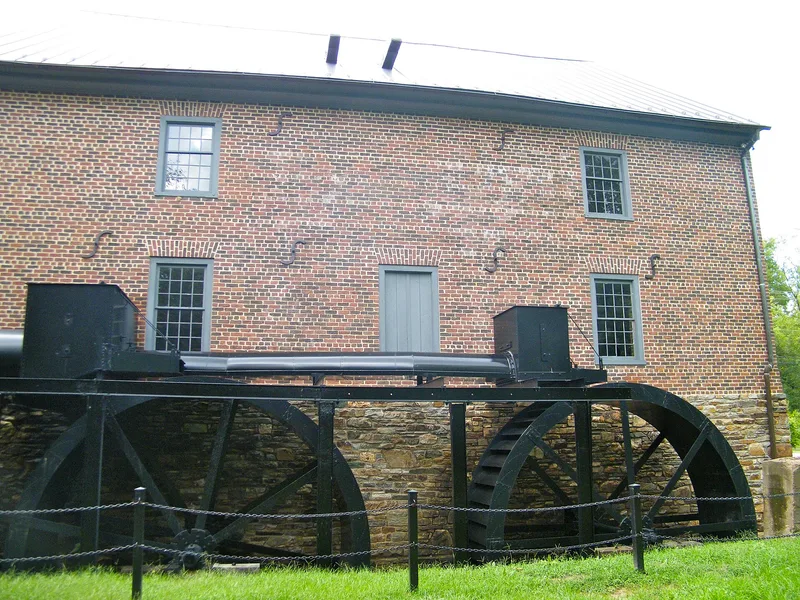
Aldie is a small Loudoun County village centered on a grist mill, a miller's house and a manor house in the gap of the Little River. Charles Fenton Mercer settled nearby in 1803, built a brick house on a hill above the Little River Turnpike, and in 1804 obtained rights to dam the river. A large brick mill was raised soon afterward, and the village that grew beside it was named Aldie in 1810. The three-part mill retains much of its original machinery, including imported French flint burrstones, and its twin overshot wheels are thought to be unique in Virginia. The two-story brick miller's house sits behind the mill, while the altered, stuccoed Mercer House overlooks the road from the north. Mercer served as a militia brigadier-general, a Virginia legislator who promoted the Chesapeake and Ohio Canal, and a congressman opposed to the slave trade. Together the buildings form an unusually complete early nineteenth-century mill complex.
Machine-generated summary. This summary was generated by a language model from the official nomination document and has not been reviewed line by line by an editor. It may contain errors. Check the source document before relying on any detail. Source: nomination document (PDF) · catalog entry. Generated October 2026 (model claude-sonnet-5-5, prompt v1.0-2026-10-29).
| Styles | Federal (original portion of the Mercer House) |
|---|---|
| Areas of significance | Commerce, Politics/Government, Architecture |
| Acreage | 60 |
| Boundary source | NPS cultural-resource GIS polygon |
| Full listing page | Aldie Mill Historic District (property record) |
What listing means for this property
This is a historic district. Buildings within its boundary are either contributing (they add to the district's significance) or non-contributing. Owners of contributing income-producing buildings can claim the 20% federal rehabilitation tax credit; homeowners should look at state credits. National Register districts impose no design review by themselves; a local historic district ordinance, if one exists, does (the difference explained).
General information, not legal or tax advice. Rules change; confirm with your State Historic Preservation Office or a qualified adviser.