Advance Mills

Why it's listed
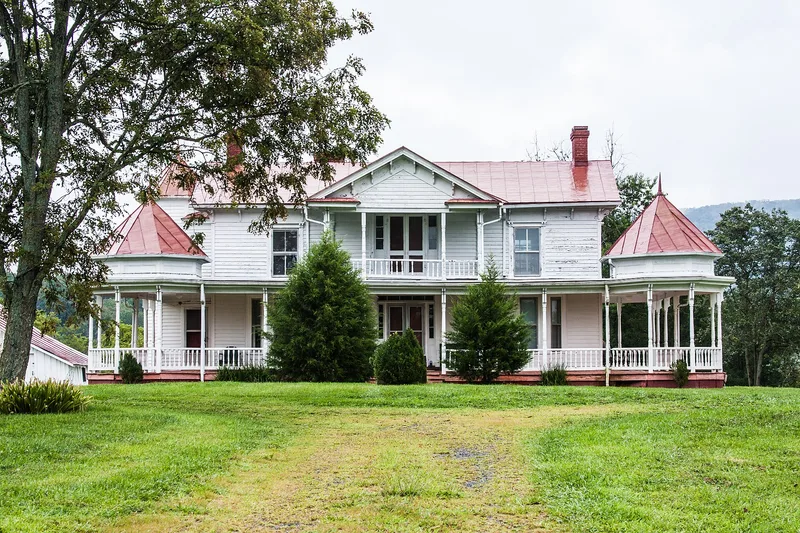
Advance Mills is a small village in northern Albemarle County, Virginia, shaped around a dam on the North Fork of the Rivanna River. The Fray family arrived in 1833 and built nearly everything in the district, including mills, a general store, houses, barns and outbuildings. The district holds 23 contributing resources, among them a circa 1810 brick house now called Holly Tree Farm with a collection of original outbuildings, the 1909 Colonial Revival house Sunnybank, two I-houses that served as the merchant's and miller's homes, a bank barn, the dam and millrace, and a circa 1900 metal truss bridge moved here in 1943. The mill and the supply store burned in the 1940s, and their stone and concrete foundations remain. Together these resources show how building methods changed from 19th-century stone to 20th-century poured concrete, and how a self-sufficient rural commercial center operated. The village was listed for its architecture, commerce, industry and transportation history between 1810 and 1948.
Machine-generated summary. This summary was generated by a language model from the official nomination document and has not been reviewed line by line by an editor. It may contain errors. Check the source document before relying on any detail. Source: nomination document (PDF) · catalog entry. Generated October 2026 (model claude-sonnet-5-5, prompt v1.0-2026-10-29).
| Period of significance | 1810-1948 |
|---|---|
| Styles | Federal, Colonial Revival, I-House, Pratt and Pony Truss, No style |
| Areas of significance | Architecture, Commerce, Industry, Transportation |
| Acreage | 85 |
| Boundary source | NPS cultural-resource GIS polygon |
| Full listing page | Advance Mills (property record) |
What listing means for this property
This is a historic district. Buildings within its boundary are either contributing (they add to the district's significance) or non-contributing. Owners of contributing income-producing buildings can claim the 20% federal rehabilitation tax credit; homeowners should look at state credits. National Register districts impose no design review by themselves; a local historic district ordinance, if one exists, does (the difference explained).
General information, not legal or tax advice. Rules change; confirm with your State Historic Preservation Office or a qualified adviser.