Abingdon Historic District (Additional Documentation)

Why it's listed
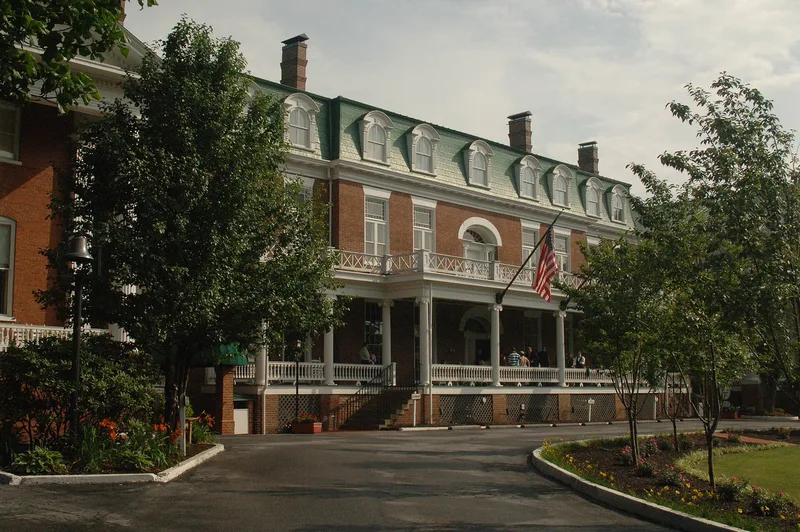
Abingdon's Main Street, covering about eight and a half blocks across two hilly ridges, preserves a broad range of nineteenth-century buildings in Southwest Virginia, an area that stayed frontier long after the town was founded in 1778. Federalist and revival-style houses, churches, offices, stores and the county court house show the mix of functions found on a main thoroughfare of the period. Notable buildings include the stuccoed Tavern from the late eighteenth century, the early-nineteenth-century Virginia House hotel, the Doctor Pitts House, the Abingdon Bank and Cashier's House, and the Martha Washington Inn, built in the 1830s by General Francis Preston. The Barter Theatre, founded in 1933 by Robert Porterfield, has won international acclaim. The town served as a mail clearing house for Southwest Virginia by 1793, suffered fires set during Union raids in December 1864, and was home to a Treasury Secretary, a Confederate general and three Virginia governors. Twentieth-century intrusions have affected the area, though its historic character survives.
Machine-generated summary. This summary was generated by a language model from the official nomination document and has not been reviewed line by line by an editor. It may contain errors. Check the source document before relying on any detail. Source: nomination document (PDF) · catalog entry. Generated October 2026 (model claude-sonnet-5-5, prompt v1.0-2026-10-29).
| Period of significance | 18th and 19th centuries |
|---|---|
| Styles | Federalist and nineteenth-century revival designs |
| Areas of significance | Commerce, Politics/Government, Architecture, Industry, Performing Arts |
| Acreage | 35 |
| Boundary source | NPS cultural-resource GIS polygon |
| Full listing page | Abingdon Historic District (Additional Documentation) (property record) |
What listing means for this property
This is a historic district. Buildings within its boundary are either contributing (they add to the district's significance) or non-contributing. Owners of contributing income-producing buildings can claim the 20% federal rehabilitation tax credit; homeowners should look at state credits. National Register districts impose no design review by themselves; a local historic district ordinance, if one exists, does (the difference explained).
General information, not legal or tax advice. Rules change; confirm with your State Historic Preservation Office or a qualified adviser.