2900 Block Grove Avenue Historic District

The National Park Service has not published a boundary polygon for this district; the map shows the listed properties inside it and the district's reference point.
Why it's listed
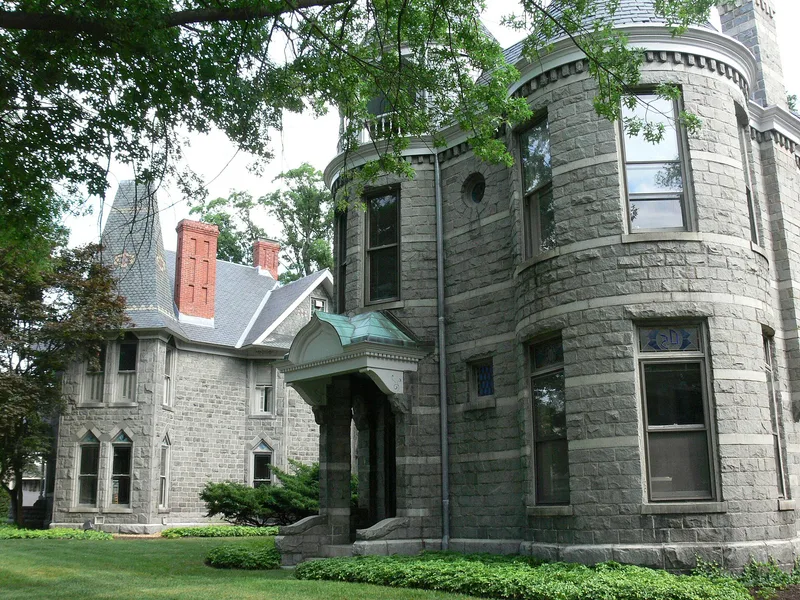
Four stone-fronted houses on the south side of the 2900 block of Grove Avenue in Richmond form this small district, facing the landscaped grounds of the Virginia Museum. Three were built in the late 1890s in the Queen Anne style, with rough-faced stone, irregular gabled roofs with patterned tiles, witch-hat roofs and conical turrets. Inside, the houses retain stained glass, carved stairs, glazed scenic tiles on fireplaces and brass chandeliers with crystals dated 1895. The fourth house, at 2901, dates from 1912 and is a square stone building with Spanish Mission features and red tile roofing. Wooden carriage houses with cupolas and scrollwork line the rear alley. The land was held by the Harvie family, then sold in 1886 to the West End Land Improvement Company, which planned suburban development. The block survives as the most successful remnant of that late nineteenth-century West End growth and is valued for its Queen Anne architecture and quiet, tree-shaded setting.
Machine-generated summary. This summary was generated by a language model from the official nomination document and has not been reviewed line by line by an editor. It may contain errors. Check the source document before relying on any detail. Source: nomination document (PDF) · catalog entry. Generated October 2026 (model claude-sonnet-5-5, prompt v1.0-2026-10-29).
| Styles | Queen Anne (2905, 2911, 2915); square stone house with Spanish Mission features (2901) |
|---|---|
| Areas of significance | Architecture |
| Acreage | 9.9 |
| Boundary source | not published |
| Full listing page | 2900 Block Grove Avenue Historic District (property record) |
What listing means for this property
This is a historic district. Buildings within its boundary are either contributing (they add to the district's significance) or non-contributing. Owners of contributing income-producing buildings can claim the 20% federal rehabilitation tax credit; homeowners should look at state credits. National Register districts impose no design review by themselves; a local historic district ordinance, if one exists, does (the difference explained).
General information, not legal or tax advice. Rules change; confirm with your State Historic Preservation Office or a qualified adviser.