Zilker Park Historic District

Why it's listed
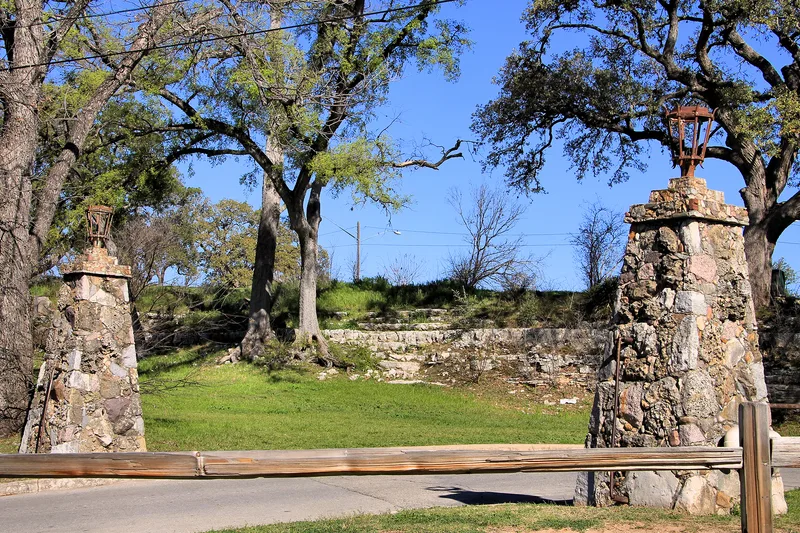
Zilker Park is a 350-acre municipal park along the south bank of the Colorado River near downtown Austin, Texas. It combines two earlier parks: the roughly 50-acre Barton Springs Park, built around a spring-fed pool, and the roughly 300-acre Zilker Park. Austin resident Andrew J. Zilker transferred the land to the city in stages beginning in 1917, giving a city with few parks a large reservation. Much of the surviving development dates to a 1933-34 building campaign carried out by Civil Works Administration and Civilian Conservation Corps crews. Native limestone buildings such as the clubhouse and cabin follow the NPS rustic tradition, and the Rock Garden, Mirror Pond, Rock Island, entrance piers and ballfields add to the historic setting. The park was laid out with an active playground and swimming area alongside a naturalistic section for walking and picnicking. Newer additions, including the Nature Center and botanical gardens, outnumber historic resources, but open spaces, large trees and views preserve the historic landscape.
Machine-generated summary. This summary was generated by a language model from the official nomination document and has not been reviewed line by line by an editor. It may contain errors. Check the source document before relying on any detail. Source: nomination document (PDF) · catalog entry. Generated October 2026 (model claude-sonnet-5-5, prompt v1.0-2026-10-29).
| Styles | NPS rustic architecture; Moderne |
|---|---|
| Areas of significance | Architecture, Conservation, Entertainment/Recreation, Landscape Architecture |
| Acreage | 350 |
| Boundary source | NPS cultural-resource GIS polygon |
| Full listing page | Zilker Park Historic District (property record) |
What listing means for this property
This is a historic district. Buildings within its boundary are either contributing (they add to the district's significance) or non-contributing. Owners of contributing income-producing buildings can claim the 20% federal rehabilitation tax credit; homeowners should look at state credits. National Register districts impose no design review by themselves; a local historic district ordinance, if one exists, does (the difference explained).
General information, not legal or tax advice. Rules change; confirm with your State Historic Preservation Office or a qualified adviser.