Wyatt Street Shotgun House Historic District

The National Park Service has not published a boundary polygon for this district; the map shows the listed properties inside it and the district's reference point.
Why it's listed
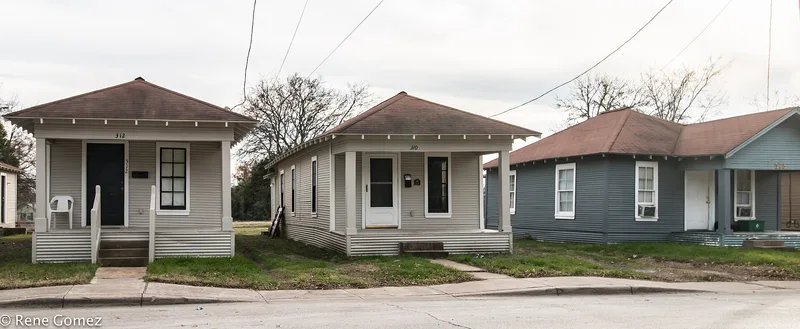
Eight modest frame houses line the east side of the 300 block of Wyatt Street in Waxahachie, forming a district built about 1918. Seven follow the shotgun plan, a narrow house one room wide and two rooms deep, with a low hipped roof and a single-bay inset front porch. The eighth, at 308 Wyatt, is a two-room house with a gable roof that matches its neighbors in scale and materials. Shed additions have been added at the rear of some, but most of the houses have changed little since construction. The street lies in an area that has historically been Waxahachie's Black community, and the houses were built for poor Black laborers. The row is valued as a rare, cohesive reminder of lower-class Black housing in the early twentieth century, when many similar dwellings elsewhere in town were moved, demolished or remodeled beyond recognition. The shotgun form itself has roots traced to Africa and the Caribbean and was common across the South into the 1930s.
Machine-generated summary. This summary was generated by a language model from the official nomination document and has not been reviewed line by line by an editor. It may contain errors. Check the source document before relying on any detail. Source: nomination document (PDF) · catalog entry. Generated October 2026 (model claude-sonnet-5-5, prompt v1.0-2026-10-29).
| Period of significance | 1900-1935 |
|---|---|
| Styles | Shotgun house (vernacular) |
| Areas of significance | Black, Architecture |
| Acreage | 1 |
| Boundary source | not published |
| Full listing page | Wyatt Street Shotgun House Historic District (property record) |
What listing means for this property
This is a historic district. Buildings within its boundary are either contributing (they add to the district's significance) or non-contributing. Owners of contributing income-producing buildings can claim the 20% federal rehabilitation tax credit; homeowners should look at state credits. National Register districts impose no design review by themselves; a local historic district ordinance, if one exists, does (the difference explained).
General information, not legal or tax advice. Rules change; confirm with your State Historic Preservation Office or a qualified adviser.