Wilson Block

Why it's listed
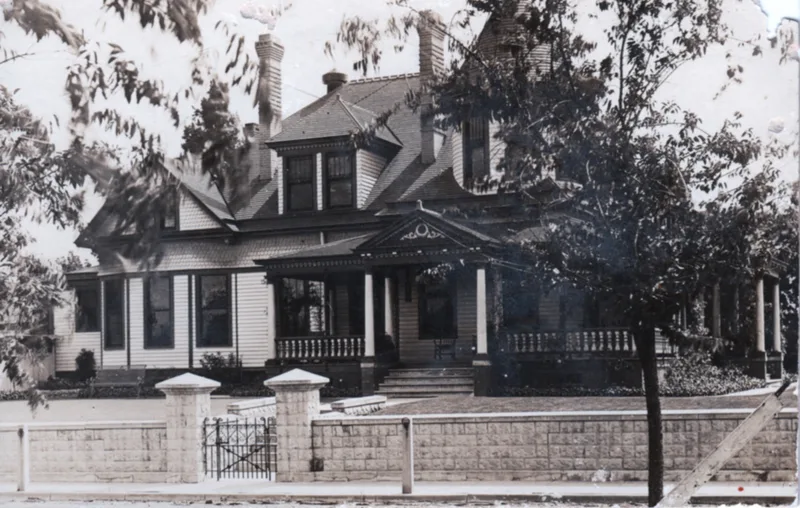
Six frame houses and their outbuildings make up this small Dallas district near the central business district, on the block bounded by Swiss Avenue, Oak Street, Floyd Street and Liberty Street. The largest, at 2922 Swiss Avenue, was designed in 1899 as the home of Fred and Henrietta Wilson. It is a Queen Anne house with a conical turret, many gables and dormers, and bands of patterned shingles. Three smaller houses on Swiss Avenue were built as rental property, and two small houses on Floyd Street probably served as servants' quarters. Together they share clapboard siding, hipped roofs, corbeled chimneys and classical porch details. The land lay in an area where La Reunion colonists and their descendants resettled, and Henrietta Wilson came from a colonist family. Fred Wilson was a Park Board member and civic leader. The nomination calls the group the most cohesive turn-of-the-century ensemble in Dallas. At the time of listing the houses were vacant, and one had been severely damaged by fire.
Machine-generated summary. This summary was generated by a language model from the official nomination document and has not been reviewed line by line by an editor. It may contain errors. Check the source document before relying on any detail. Source: nomination document (PDF) · catalog entry. Generated October 2026 (model claude-sonnet-5-5, prompt v1.0-2026-10-29).
| Period of significance | 1900- |
|---|---|
| Styles | Queen Anne / Victorian |
| Areas of significance | Architecture, Social History |
| Acreage | 2 |
| Boundary source | NPS cultural-resource GIS polygon |
| Full listing page | Wilson Block (property record) |
What listing means for this property
This is a historic district. Buildings within its boundary are either contributing (they add to the district's significance) or non-contributing. Owners of contributing income-producing buildings can claim the 20% federal rehabilitation tax credit; homeowners should look at state credits. National Register districts impose no design review by themselves; a local historic district ordinance, if one exists, does (the difference explained).
Noted as vacant in the nomination. Nomination documents can be decades old; current status may differ. If you are considering buying an empty listed property, read the due-diligence checklist.
General information, not legal or tax advice. Rules change; confirm with your State Historic Preservation Office or a qualified adviser.