Willow Street Pump Station

The National Park Service has not published a boundary polygon for this district; the map shows the listed properties inside it and the district's reference point.
Why it's listed
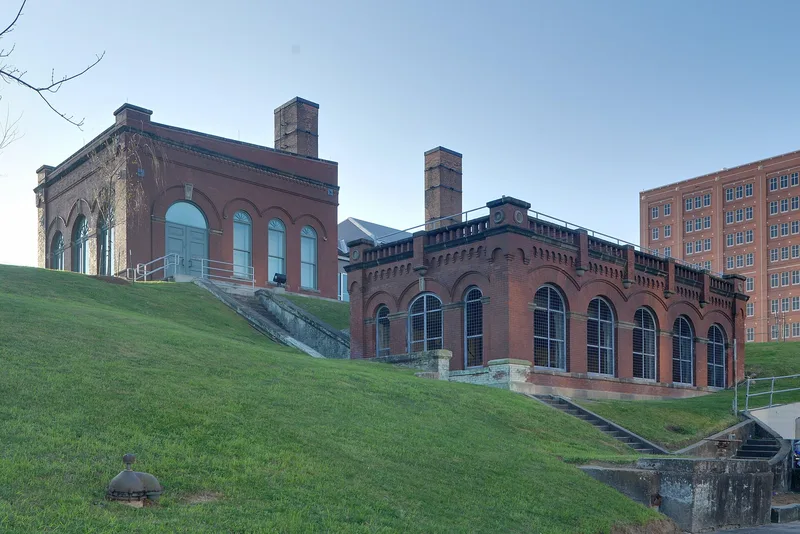
Along White Oak Bayou just north of downtown Houston, this small complex once handled the city's sewage and trash. It includes a 1902 Romanesque Revival storage building, a pump house built into the bayou bank, a steep concrete staircase, an incinerator built in 1914 and the early 1920s, and a 1930 grit chamber that screened debris from bayou water. Engineer Alexander Potter designed the pump station, completed in March 1902 as Houston's first sewage lift station. Sewage was pumped through cast iron pipes to filter beds about a mile and a half downstream. The facility mattered beyond sanitation: the federal government tied money for ship channel improvements to the city treating its sewage, and that funding helped Houston become a major inland port. The buildings were rehabilitated in 2003, with glass and steel additions joining the storage building and incinerator. Three of the original pumps remain in place as an exhibit, and the site is now used for education.
Machine-generated summary. This summary was generated by a language model from the official nomination document and has not been reviewed line by line by an editor. It may contain errors. Check the source document before relying on any detail. Source: nomination document (PDF) · catalog entry. Generated October 2026 (model claude-sonnet-5-5, prompt v1.0-2026-10-29).
| Period of significance | 1902-1930 |
|---|---|
| Styles | Late Victorian - Romanesque Revival |
| Areas of significance | Community Planning and Development |
| Acreage | 0.9 |
| Boundary source | not published |
| Full listing page | Willow Street Pump Station (property record) |
What listing means for this property
This is a historic district. Buildings within its boundary are either contributing (they add to the district's significance) or non-contributing. Owners of contributing income-producing buildings can claim the 20% federal rehabilitation tax credit; homeowners should look at state credits. National Register districts impose no design review by themselves; a local historic district ordinance, if one exists, does (the difference explained).
General information, not legal or tax advice. Rules change; confirm with your State Historic Preservation Office or a qualified adviser.