Westphalia Rural Historic District

Why it's listed
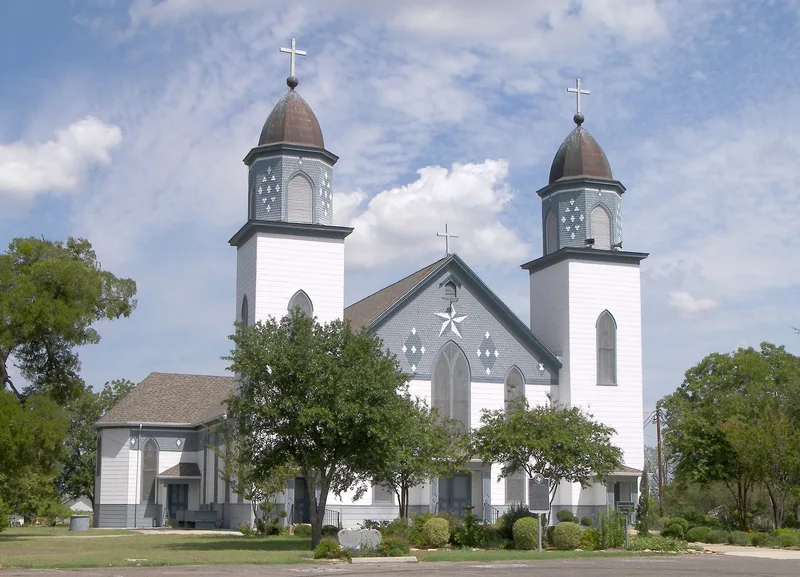
Westphalia Rural Historic District covers nearly 5,500 acres of upland prairie in western Falls County, Texas, built around a village settled by German Catholic families in the late 19th century. The village centers on the 1894 Church of the Visitation of the Blessed Virgin, whose twin steeples are visible from nearly everywhere in the district. Nearby are the 1896 Westphalia Little School, a 1921 school and convent, St. Mary's Cemetery with its 1908 bronze crucifixion statue, early 20th century stores, and the last historic cotton gin. Beyond the village, 35 historic farmsteads hold late 19th and early 20th century houses and outbuildings within fields, pastures and fence rows that follow the original grid of roughly 270-acre tracts. The district was listed because this layout, its buildings and its cultural ties to the church remain largely intact. Highway 320, built in 1938, ended the community's isolation and began a slow population decline, yet descendants of the pioneer settlers still live and farm here.
Machine-generated summary. This summary was generated by a language model from the official nomination document and has not been reviewed line by line by an editor. It may contain errors. Check the source document before relying on any detail. Source: nomination document (PDF) · catalog entry. Generated October 2026 (model claude-sonnet-5-5, prompt v1.0-2026-10-29).
| Styles | Center passage, L-plan, Craftsman/Bungalow, and no style |
|---|---|
| Areas of significance | Community Planning and Development, Agriculture, Architecture |
| Acreage | 5500 |
| Boundary source | NPS cultural-resource GIS polygon |
| Full listing page | Westphalia Rural Historic District (property record) |
What listing means for this property
This is a historic district. Buildings within its boundary are either contributing (they add to the district's significance) or non-contributing. Owners of contributing income-producing buildings can claim the 20% federal rehabilitation tax credit; homeowners should look at state credits. National Register districts impose no design review by themselves; a local historic district ordinance, if one exists, does (the difference explained).
General information, not legal or tax advice. Rules change; confirm with your State Historic Preservation Office or a qualified adviser.