Veterans Administration Hospital Historic District

Why it's listed
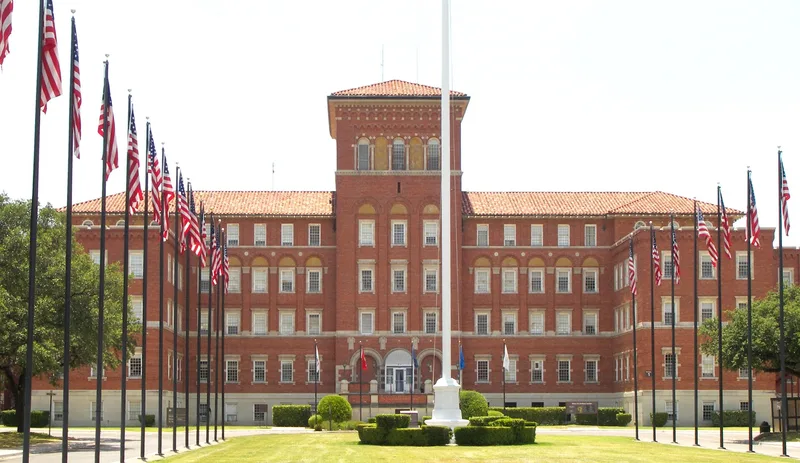
Built by the federal government as a hospital for veterans needing long-term care after World War I, this campus in Waco opened on May 6, 1932, after about a year of construction. Its red-brick buildings with clay barrel-tile roofs, cast-stone basements and terra cotta details follow a Mediterranean Revival design. A grand divided boulevard leads to the six-story main building, while patient buildings ring a central oval mall in a Beaux Arts arrangement meant to give residents an open, healthful setting and help contain disease. Construction continued through 1939, and five more patient buildings were added in 1945 for World War II veterans, raising capacity to 2,040. Most interiors were plain and utilitarian, with only two lobbies keeping classical pilasters and terrazzo floors. The district is recognized for its architecture, its place in health care and federal policy, and for showing the Mediterranean Revival style more purely than any other veterans hospital of its era.
Machine-generated summary. This summary was generated by a language model from the official nomination document and has not been reviewed line by line by an editor. It may contain errors. Check the source document before relying on any detail. Source: nomination document (PDF) · catalog entry. Generated October 2026 (model claude-sonnet-5-5, prompt v1.0-2026-10-29).
| Period of significance | 1930-1945 |
|---|---|
| Styles | Late 19th and Early 20th Century Revivals: Mission/Spanish Colonial Revival (Mediterranean Revival) |
| Areas of significance | Architecture, Politics/Government, Health/Medicine |
| Acreage | 125 |
| Boundary source | NPS cultural-resource GIS polygon |
| Full listing page | Veterans Administration Hospital Historic District (property record) |
What listing means for this property
This is a historic district. Buildings within its boundary are either contributing (they add to the district's significance) or non-contributing. Owners of contributing income-producing buildings can claim the 20% federal rehabilitation tax credit; homeowners should look at state credits. National Register districts impose no design review by themselves; a local historic district ordinance, if one exists, does (the difference explained).
General information, not legal or tax advice. Rules change; confirm with your State Historic Preservation Office or a qualified adviser.