University Avenue-Elm Street Historic District

The National Park Service has not published a boundary polygon for this district; the map shows the listed properties inside it and the district's reference point.
Why it's listed
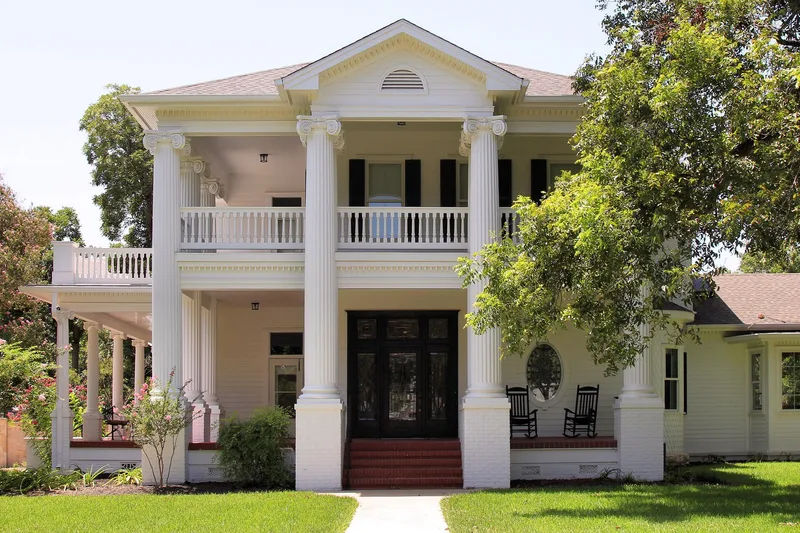
Five late Victorian houses on East University Avenue and Elm Street in Georgetown, Texas, form this small residential district, built between 1889 and 1900 on generous lots with broad lawns. The wood frame homes show Queen Anne, Eastlake and Georgian Revival influences, including ridge rows, turned porch columns, jigsaw bargeboards and, at 308 East University, an Ionic-columned portico added around 1900. Dr. Robert Stewart Hyer designed the house at 304 East University, and the C. S. Belford Lumber Company built the three on Elm Street. Each was built for a figure in local life: a Southwestern University dean, a merchant and realtor, a mayor and alderman, a wholesale grocer and trail driver, and a banker. The group is valued because the neighborhood has changed little in about eighty years, and all five remain private residences in good condition. Three have been designated Recorded Texas Historic Landmarks.
Machine-generated summary. This summary was generated by a language model from the official nomination document and has not been reviewed line by line by an editor. It may contain errors. Check the source document before relying on any detail. Source: nomination document (PDF) · catalog entry. Generated October 2026 (model claude-sonnet-5-5, prompt v1.0-2026-10-29).
| Period of significance | 1800-1899 |
|---|---|
| Styles | Late Victorian with Queen Anne, Eastlake and Georgian Revival influences |
| Areas of significance | Architecture |
| Acreage | 5 |
| Boundary source | not published |
| Full listing page | University Avenue-Elm Street Historic District (property record) |
What listing means for this property
This is a historic district. Buildings within its boundary are either contributing (they add to the district's significance) or non-contributing. Owners of contributing income-producing buildings can claim the 20% federal rehabilitation tax credit; homeowners should look at state credits. National Register districts impose no design review by themselves; a local historic district ordinance, if one exists, does (the difference explained).
General information, not legal or tax advice. Rules change; confirm with your State Historic Preservation Office or a qualified adviser.