Swedish Hill Historic District

Why it's listed
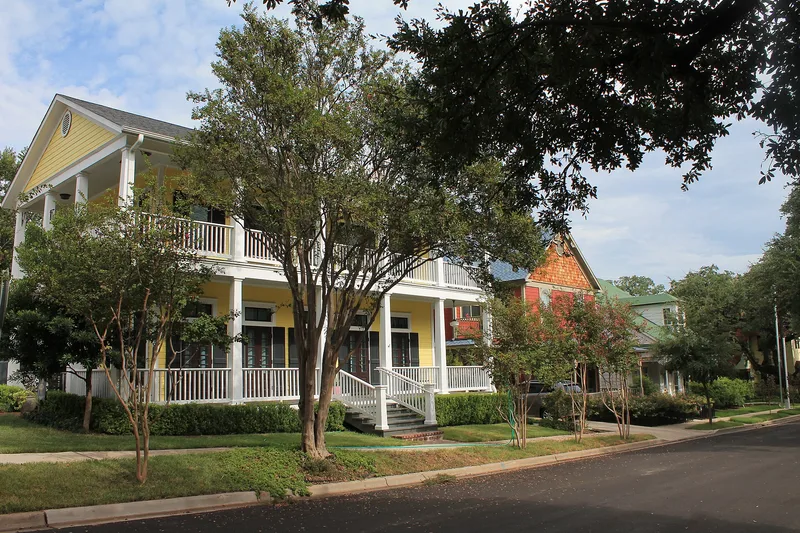
Swedish Hill is a compact East Austin neighborhood of twelve houses fronting East 14th and East 15th streets, between Olander and Waller streets. Built between about 1880 and about 1938, the houses represent every decade of that span. The area was part of the Original City of Austin and was developed earlier than most of East Austin, housing downtown business people and tradesmen, several of them carpenters. Styles include vernacular Victorian L-plan, T-plan, Cumberland-plan and corner-porch houses, along with a pyramidal cottage and bungalows. Many display carpentry ornament such as porch columns, brackets, spindles and varied siding and shingles. Setbacks, landscaping, scale and materials are consistent, and the buildings are well maintained. Two buildings, a small modern residence and a Cumberland-plan cottage with applied siding, do not contribute but fit the scale of their neighbors. The district was recognized as the best example in East Austin of a late nineteenth- and early twentieth-century residential neighborhood that remains intact. Surrounding blocks were left out because their facades had been heavily altered.
Machine-generated summary. This summary was generated by a language model from the official nomination document and has not been reviewed line by line by an editor. It may contain errors. Check the source document before relying on any detail. Source: nomination document (PDF) · catalog entry. Generated October 2026 (model claude-sonnet-5-5, prompt v1.0-2026-10-29).
| Styles | Vernacular Victorian L plan, T plan, Cumberland plan, late Victorian corner-porch plan, Pyramidal plan, and Bungalow plan |
|---|---|
| Areas of significance | Architecture |
| Acreage | 4 |
| Boundary source | NPS cultural-resource GIS polygon |
| Full listing page | Swedish Hill Historic District (property record) |
What listing means for this property
This is a historic district. Buildings within its boundary are either contributing (they add to the district's significance) or non-contributing. Owners of contributing income-producing buildings can claim the 20% federal rehabilitation tax credit; homeowners should look at state credits. National Register districts impose no design review by themselves; a local historic district ordinance, if one exists, does (the difference explained).
General information, not legal or tax advice. Rules change; confirm with your State Historic Preservation Office or a qualified adviser.