Stagecoach Inn (Boundary Increase)

The National Park Service has not published a boundary polygon for this district; the map shows the listed properties inside it and the district's reference point.
Why it's listed
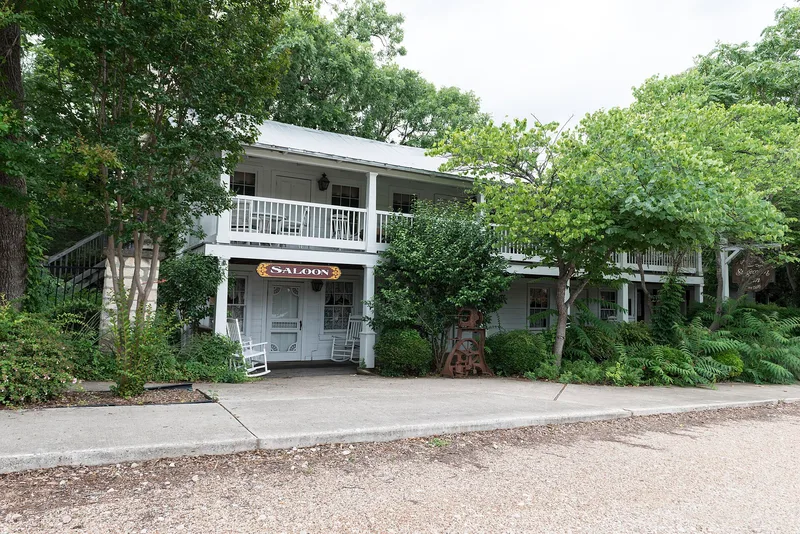
Standing at Main and Front Streets in the center of Salado, near the community's springs, this two-story inn was built in 1852 by W.B. Armstrong, its original owner. It served as an inn and stagecoach stop for travelers and for settlers moving into the area. Guest registers are said to record Gen. George Custer, Col. Robert E. Lee and Sam Houston. The building is believed to be the oldest remaining structure in Salado. It is a wood-frame building with clapboard siding, a limestone end chimney, a standing seam metal gable roof, six-over-six double-hung windows, and a two-story front portico with square columns and a second-story balustrade. The front facade has five bays. Wooden walkways run along the north side, and frame additions were made at the rear around 1940 and 1950. It is regarded as a good example of frontier vernacular architecture and is now used as a restaurant. The nominated area is under one acre.
Machine-generated summary. This summary was generated by a language model from the official nomination document and has not been reviewed line by line by an editor. It may contain errors. Check the source document before relying on any detail. Source: nomination document (PDF). Generated October 2026 (model claude-sonnet-5-5, prompt v1.0-2026-10-29).
| Styles | Frontier period vernacular |
|---|---|
| Areas of significance | Architecture, Transportation, Entertainment/Recreation, Landscape Architecture |
| Acreage | 11.81 |
| Boundary source | not published |
| Full listing page | Stagecoach Inn (Boundary Increase) (property record) |
What listing means for this property
This is a historic district. Buildings within its boundary are either contributing (they add to the district's significance) or non-contributing. Owners of contributing income-producing buildings can claim the 20% federal rehabilitation tax credit; homeowners should look at state credits. National Register districts impose no design review by themselves; a local historic district ordinance, if one exists, does (the difference explained).
General information, not legal or tax advice. Rules change; confirm with your State Historic Preservation Office or a qualified adviser.