South Boulevard-Park Row Historic District

Why it's listed
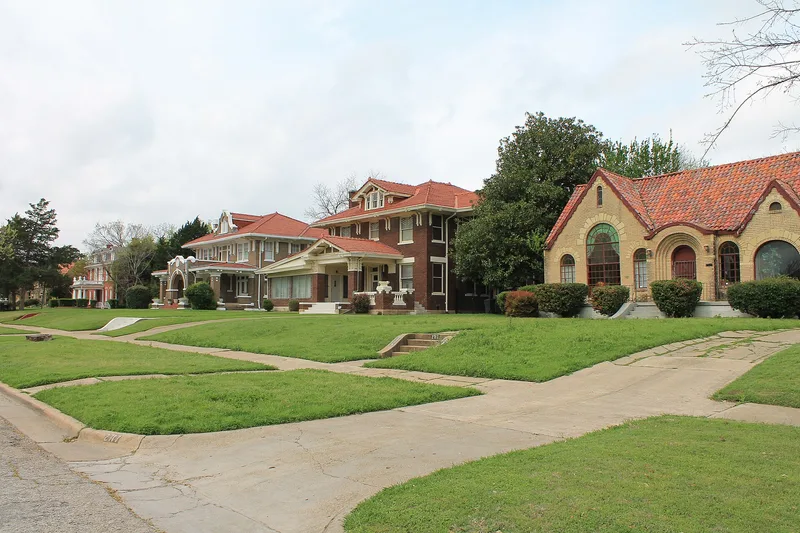
Along four blocks each of South Boulevard and Park Row in near southeast Dallas sits a neighborhood of 116 houses built as stylish homes for the city's new business leaders in the early twentieth century. Larger, architect-designed two-story houses line South Boulevard, while smaller bungalows are concentrated on Park Row. Styles include Prairie, Mission Revival, late Georgian Revival and neo-classical, with several eclectic designs. Prominent regional architects worked here, including H.A. Overbeck and Howard Myers, who designed the 1938 Tiferet Israel Synagogue. The neighborhood grew rapidly after Temple Emanuel moved to South Boulevard in 1913, and by the 1920s it was the center of Dallas's Jewish social and religious life. Herbert Marcus, co-founder of Neiman Marcus, lived at 2620 South Boulevard. After the synagogues relocated in the early 1950s, many well-to-do Black families, including educators, lawyers and clergy, bought homes here. The district is listed for its architecture and its role in the city's development.
Machine-generated summary. This summary was generated by a language model from the official nomination document and has not been reviewed line by line by an editor. It may contain errors. Check the source document before relying on any detail. Source: nomination document (PDF) · catalog entry. Generated October 2026 (model claude-sonnet-5-5, prompt v1.0-2026-10-29).
| Period of significance | 1900-1925 |
|---|---|
| Styles | Prairie Style, bungalow, Mission Revival, late Georgian Revival and neo-classical, with eclectic examples |
| Areas of significance | Architecture |
| Acreage | 46 |
| Boundary source | NPS cultural-resource GIS polygon |
| Full listing page | South Boulevard-Park Row Historic District (property record) |
What listing means for this property
This is a historic district. Buildings within its boundary are either contributing (they add to the district's significance) or non-contributing. Owners of contributing income-producing buildings can claim the 20% federal rehabilitation tax credit; homeowners should look at state credits. National Register districts impose no design review by themselves; a local historic district ordinance, if one exists, does (the difference explained).
General information, not legal or tax advice. Rules change; confirm with your State Historic Preservation Office or a qualified adviser.