Sisterdale Valley District

Why it's listed
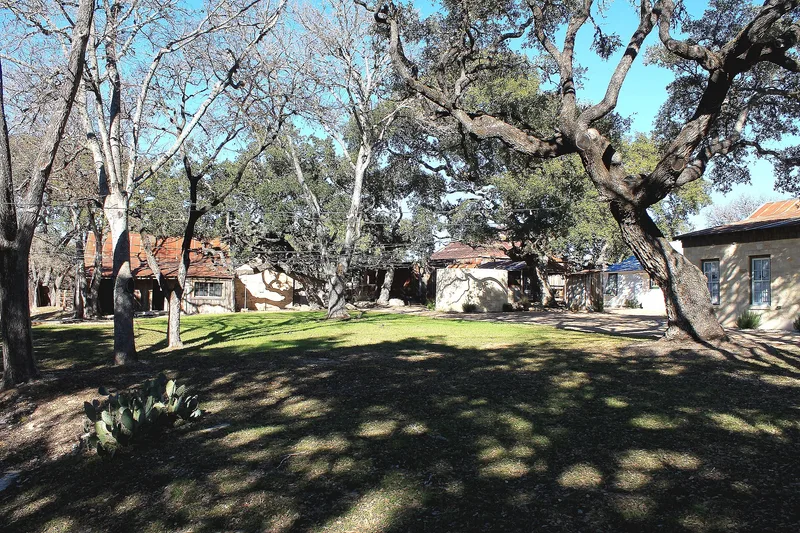
Sisterdale is a small Hill Country community in Kendall County, Texas, founded in 1847 in the valley of the two Sister Creeks. This historic district centers on Badenthal, a private farm whose buildings reflect the town's early German settlers. Nicholas Zink built a windowless log block house there around 1847. Ernst Kapp, a German professor and political refugee, bought it in 1850, expanded it with a dog run and second story, and added stone buildings used as a hydropathic institute in the 1850s. A log coachhouse, smithy, cypress barn, smokehouse and sugar press also survive. A second complex built by the Langbein family from the 1870s to 1910 shows the later generation of German farmers. An 1893 stone schoolhouse stands at the entrance. The district is significant as the only surviving physical record of Sisterdale's Latin Colony of educated German intellectuals and the transition to later immigrant farming families.
Machine-generated summary. This summary was generated by a language model from the official nomination document and has not been reviewed line by line by an editor. It may contain errors. Check the source document before relying on any detail. Source: nomination document (PDF) · catalog entry. Generated October 2026 (model claude-sonnet-5-5, prompt v1.0-2026-10-29).
| Period of significance | 19th Century |
|---|---|
| Styles | Pioneer German vernacular log and limestone construction |
| Areas of significance | Military, Health/Medicine, Architecture |
| Acreage | 2893 |
| Boundary source | NPS cultural-resource GIS polygon |
| Full listing page | Sisterdale Valley District (property record) |
What listing means for this property
This is a historic district. Buildings within its boundary are either contributing (they add to the district's significance) or non-contributing. Owners of contributing income-producing buildings can claim the 20% federal rehabilitation tax credit; homeowners should look at state credits. National Register districts impose no design review by themselves; a local historic district ordinance, if one exists, does (the difference explained).
General information, not legal or tax advice. Rules change; confirm with your State Historic Preservation Office or a qualified adviser.