Silk Stocking Residential Historic District

Why it's listed
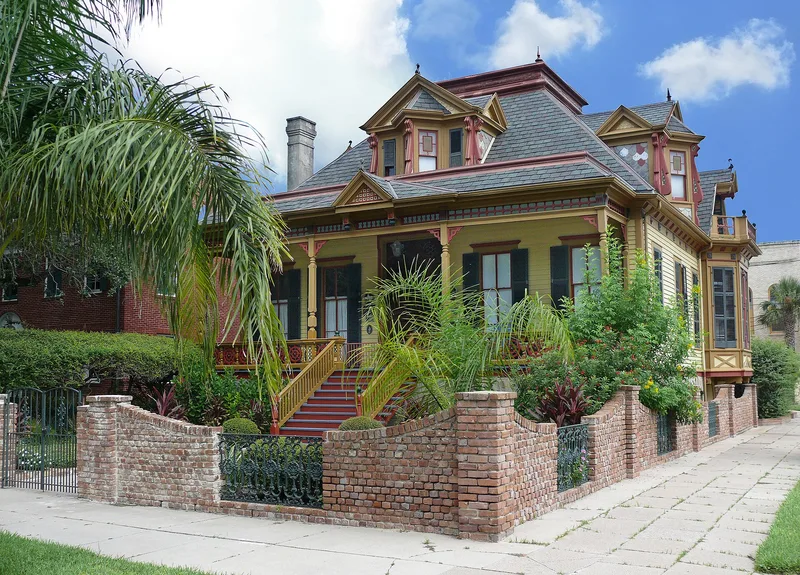
Southwest of Galveston's central business district, this residential district covers four complete blocks and portions of twelve others between the beach and Broadway. Single-family frame houses on narrow lots dominate, with Greek Revival cottages in the northern and eastern parts and Queen Anne residences along the 1300-1600 blocks of 24th and 25th streets. Bungalows and period revival houses fill in the early 20th century development. Many houses sit on raised foundations, a response to repeated flooding, and feature porches and projecting bays to catch Gulf breezes. Land that once held the Texas Cotton Press Company was replatted and sold as lots in 1898, and the area was built up after the 1900 storm and the 1904 grade raising. Rosenberg Avenue, with its planted center esplanade, forms the main thoroughfare. The nomination counts 204 contributing resources and 86 noncontributing ones, and notes that the stagnation of Galveston's economy helped preserve much of its 19th and early 20th century building stock.
Machine-generated summary. This summary was generated by a language model from the official nomination document and has not been reviewed line by line by an editor. It may contain errors. Check the source document before relying on any detail. Source: nomination document (PDF) · catalog entry. Generated October 2026 (model claude-sonnet-5-5, prompt v1.0-2026-10-29).
| Styles | Queen Anne; Colonial Revival; Bungalow; Greek Revival |
|---|---|
| Areas of significance | Architecture |
| Acreage | 45 |
| Boundary source | NPS cultural-resource GIS polygon |
| Full listing page | Silk Stocking Residential Historic District (property record) |
What listing means for this property
This is a historic district. Buildings within its boundary are either contributing (they add to the district's significance) or non-contributing. Owners of contributing income-producing buildings can claim the 20% federal rehabilitation tax credit; homeowners should look at state credits. National Register districts impose no design review by themselves; a local historic district ordinance, if one exists, does (the difference explained).
General information, not legal or tax advice. Rules change; confirm with your State Historic Preservation Office or a qualified adviser.