Seguin Commercial Historic District

Why it's listed
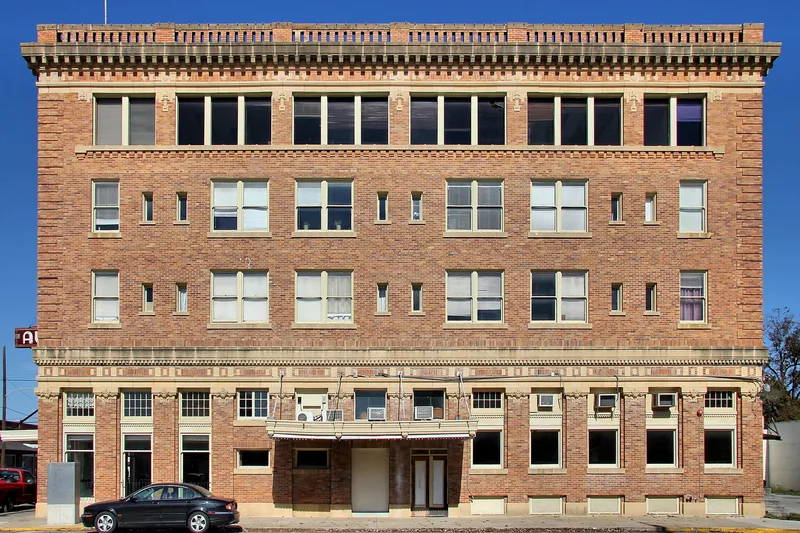
Seguin's commercial core in Guadalupe County, Texas, is a district of roughly 120 buildings, most built between 1885 and 1925. The town was platted in 1838 on a regular grid with 70-foot streets and two public squares, and that pattern survives almost unchanged. Buildings are mostly one- or two-story brick structures with flat roofs and brick or metal cornices, many Italianate in proportion and ornament. The area also contains reminders of earlier eras: a few buildings made partly of concrete from the 1850s, when Seguin earned the nickname 'Concrete City', and the 1860s Vivroux store, the only Civil War-era commercial building left. Larger landmarks include the four-story Aumont Hotel and the 1935 Art Moderne courthouse built as a WPA project. Of the buildings counted, 71 contribute to the district's historic character and 47 do not. Some storefronts have modern windows or false facades, yet the district keeps its turn-of-the-century appearance more fully than comparable nearby cities.
Machine-generated summary. This summary was generated by a language model from the official nomination document and has not been reviewed line by line by an editor. It may contain errors. Check the source document before relying on any detail. Source: nomination document (PDF) · catalog entry. Generated October 2026 (model claude-sonnet-5-5, prompt v1.0-2026-10-29).
| Styles | Various vernacular styles, mostly Italianate in proportion and ornamentation; also Commercial Style, Moderne, Art Moderne, Queen Anne and Classical Revival examples |
|---|---|
| Areas of significance | Commerce, Politics/Government, Architecture |
| Acreage | 34 |
| Boundary source | NPS cultural-resource GIS polygon |
| Full listing page | Seguin Commercial Historic District (property record) |
What listing means for this property
This is a historic district. Buildings within its boundary are either contributing (they add to the district's significance) or non-contributing. Owners of contributing income-producing buildings can claim the 20% federal rehabilitation tax credit; homeowners should look at state credits. National Register districts impose no design review by themselves; a local historic district ordinance, if one exists, does (the difference explained).
General information, not legal or tax advice. Rules change; confirm with your State Historic Preservation Office or a qualified adviser.