San Augustin de Laredo Historic District

Why it's listed
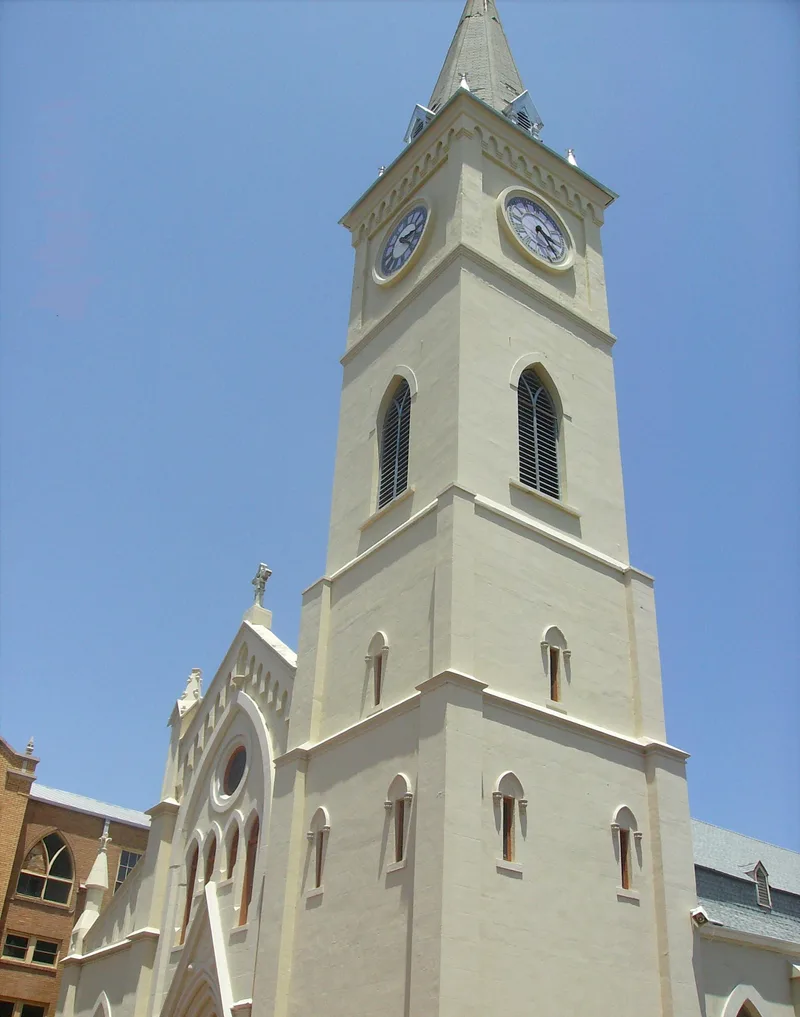
Laredo's San Agustin district covers roughly 24 acres of downtown, centered on San Agustin Plaza and bounded by Iturbide, Santa Ursula, Convent and Water streets. It marks the core of a town founded in 1755 during Jose de Escandon's colonization of the lower Rio Grande, and the plaza area matches the nucleus surveyed in 1767. No building dates from the colonization period itself, but the houses, shops and church show how the city grew outward from this square. Notable buildings include the small stone and adobe capital of the Republic of the Rio Grande, the Gothic revival San Agustin Church with its five-story tower, and several Spanish colonial vernacular homes such as Casa Ortiz, Casa Vidaurri and the Edgardo Gonzales residence. The district was recognized as the last surviving settlement on the north bank of the river directly tied to the Escandon colonization, and for its architecture and local history.
Machine-generated summary. This summary was generated by a language model from the official nomination document and has not been reviewed line by line by an editor. It may contain errors. Check the source document before relying on any detail. Source: nomination document (PDF) · catalog entry. Generated October 2026 (model claude-sonnet-5-5, prompt v1.0-2026-10-29).
| Styles | Spanish colonial vernacular (colonial vernacular); Gothic revival for San Agustin Church |
|---|---|
| Areas of significance | Architecture |
| Acreage | 23.9 |
| Boundary source | NPS cultural-resource GIS polygon |
| Full listing page | San Augustin de Laredo Historic District (property record) |
What listing means for this property
This is a historic district. Buildings within its boundary are either contributing (they add to the district's significance) or non-contributing. Owners of contributing income-producing buildings can claim the 20% federal rehabilitation tax credit; homeowners should look at state credits. National Register districts impose no design review by themselves; a local historic district ordinance, if one exists, does (the difference explained).
General information, not legal or tax advice. Rules change; confirm with your State Historic Preservation Office or a qualified adviser.