Romine Avenue Historic District

Why it's listed
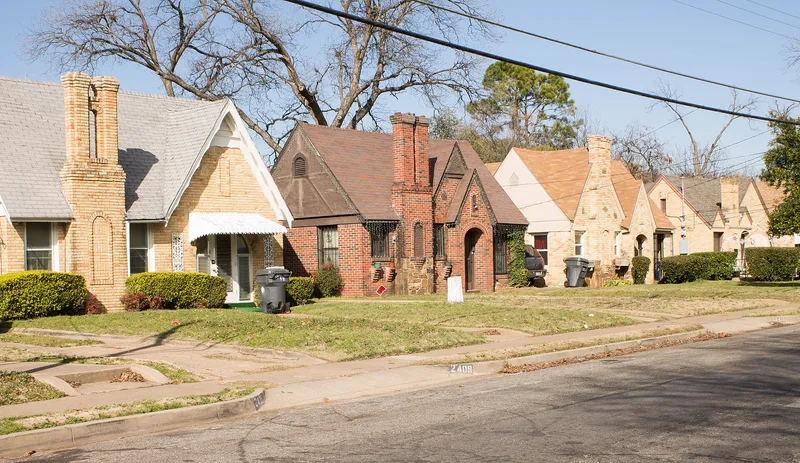
Romine Avenue in South Dallas holds a row of seventeen one-story houses faced in brick and stone, with Tudor Revival touches such as intricate chimneys, steep multiple gables and arched windows. Built mostly around 1928 to 1940 by McElveen and Sowell, Inc., a firm whose president also headed a finance company, the houses were sold exclusively to African American buyers. They were larger and far more valuable than homes in nearby Black neighborhoods such as Wheatley Place; 1936-37 tax values averaged about $1,600 per house. Original owners included a high school principal, an attorney and a teacher. The street drew professional and business families, some displaced by central-city slum clearance, at a time when white property owners and city institutions were pushing to segregate South Dallas. Fourteen houses retain enough original character to contribute to the district, while three were altered by enclosed porches. The street is recognized for its Black heritage, its role in neighborhood development and its cohesive architecture.
Machine-generated summary. This summary was generated by a language model from the official nomination document and has not been reviewed line by line by an editor. It may contain errors. Check the source document before relying on any detail. Source: nomination document (PDF) · catalog entry. Generated October 2026 (model claude-sonnet-5-5, prompt v1.0-2026-10-29).
| Period of significance | 1928-1945 |
|---|---|
| Styles | Late 19th and 20th Century Revivals: Tudor Revival |
| Areas of significance | Architecture, Black, Community Planning and Development |
| Acreage | 4 |
| Boundary source | NPS cultural-resource GIS polygon |
| Full listing page | Romine Avenue Historic District (property record) |
What listing means for this property
This is a historic district. Buildings within its boundary are either contributing (they add to the district's significance) or non-contributing. Owners of contributing income-producing buildings can claim the 20% federal rehabilitation tax credit; homeowners should look at state credits. National Register districts impose no design review by themselves; a local historic district ordinance, if one exists, does (the difference explained).
General information, not legal or tax advice. Rules change; confirm with your State Historic Preservation Office or a qualified adviser.