Rio Grande City Downtown Historic District

Why it's listed
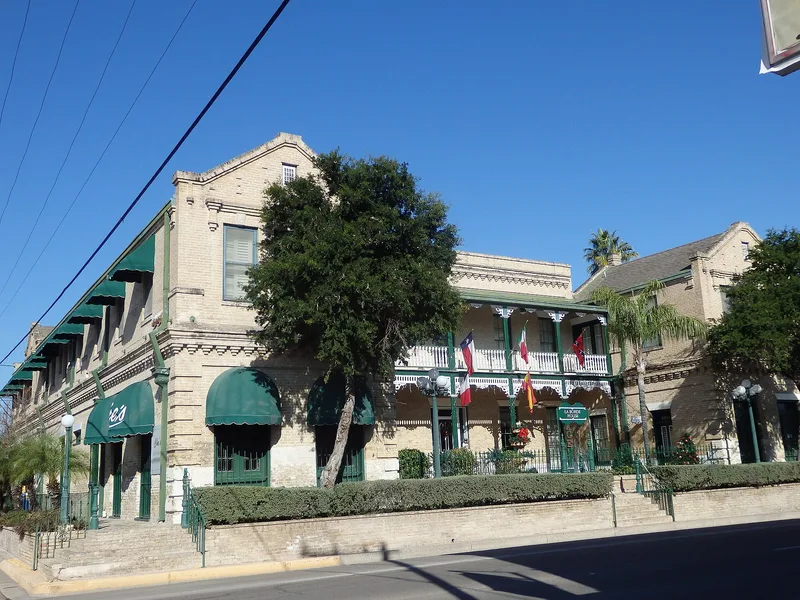
Rio Grande City's downtown district covers roughly seven blocks east of Britton Avenue, along Main, Second and Mirasoles streets. Founded in 1848 on the site of an earlier Spanish Colonial ranch, the town grew eastward toward Fort Ringgold, and its businesses followed. The district holds 88 contributing and 67 noncontributing resources, mostly shops, houses and combined store-and-home buildings. Many are built of handmade yellow or buff brick, with segmental arch windows, decorative parapets and wrought iron balconies. German mason Heinrich Portscheller shaped much of the finest brickwork, and French immigrants influenced the iron balconies. Later buildings include Queen Anne and Classical Revival houses, bungalows after the railroad arrived in 1925, and Mission Revival commercial structures. Construction largely stopped around 1940, so the district keeps a recognizable historic streetscape. Mexican, American, German and French influences appear together in a small stretch of the border region, which is the reason for the district's recognition.
Machine-generated summary. This summary was generated by a language model from the official nomination document and has not been reviewed line by line by an editor. It may contain errors. Check the source document before relying on any detail. Source: nomination document (PDF) · catalog entry. Generated October 2026 (model claude-sonnet-5-5, prompt v1.0-2026-10-29).
| Period of significance | Ending 1940 (the form states the period is set at 1940) |
|---|---|
| Styles | Late Victorian, Early 20th Century Revival Styles, Craftsman |
| Areas of significance | Architecture, Community Planning and Development, European, Hispanic |
| Acreage | 36 |
| Boundary source | NPS cultural-resource GIS polygon |
| Full listing page | Rio Grande City Downtown Historic District (property record) |
What listing means for this property
This is a historic district. Buildings within its boundary are either contributing (they add to the district's significance) or non-contributing. Owners of contributing income-producing buildings can claim the 20% federal rehabilitation tax credit; homeowners should look at state credits. National Register districts impose no design review by themselves; a local historic district ordinance, if one exists, does (the difference explained).
General information, not legal or tax advice. Rules change; confirm with your State Historic Preservation Office or a qualified adviser.