Quadrangle, The

The National Park Service has not published a boundary polygon for this district; the map shows the listed properties inside it and the district's reference point.
Why it's listed
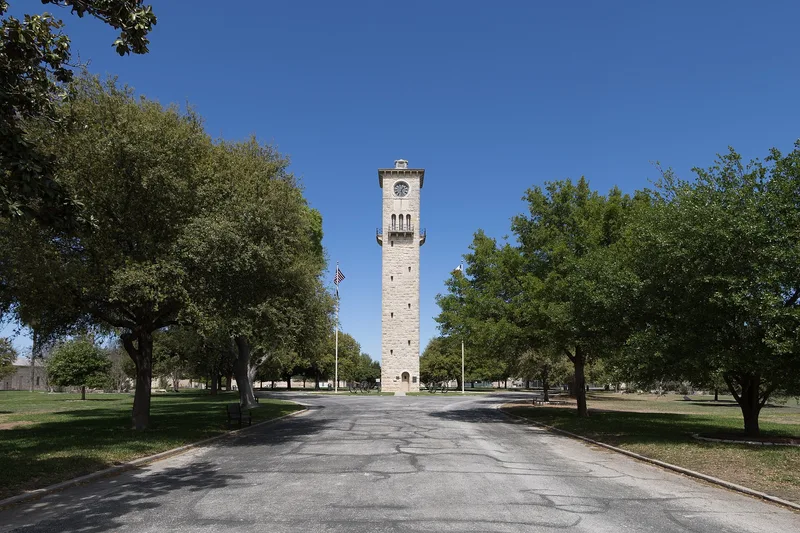
Built from 1876, the Quadrangle at Fort Sam Houston in San Antonio began as a Quartermaster Depot. Ed Braden and Company built the U-shaped rubble limestone complex with a tin roof around a central courtyard, and the original contract price of $83,900 rose to a final cost of about $98,367. A water and watch tower in the courtyard was converted to a clock tower in 1882 and holds a stone tablet reading "In Peace Prepare for War." The district covers about 8.8 acres, including the tower, water tanks and small sentry and storage buildings. General Ord took command in 1879. The post later hosted the Apache leader Geronimo in 1886, supplied the Rough Riders in 1898, and served as headquarters for Army commands, including Fifth Army from 1971. It has been altered with modern utilities and added windows but keeps its original character. It remains in military use.
Machine-generated summary. This summary was generated by a language model from the official nomination document and has not been reviewed line by line by an editor. It may contain errors. Check the source document before relying on any detail. Source: nomination document (PDF) · catalog entry. Generated October 2026 (model claude-sonnet-5-5, prompt v1.0-2026-10-29).
| Period of significance | 19th and 20th centuries (construction begun 1876) |
|---|---|
| Areas of significance | Military |
| Acreage | 8.8 |
| Boundary source | not published |
| Full listing page | Quadrangle, The (property record) |
What listing means for this property
This is a historic district. Buildings within its boundary are either contributing (they add to the district's significance) or non-contributing. Owners of contributing income-producing buildings can claim the 20% federal rehabilitation tax credit; homeowners should look at state credits. National Register districts impose no design review by themselves; a local historic district ordinance, if one exists, does (the difference explained).
General information, not legal or tax advice. Rules change; confirm with your State Historic Preservation Office or a qualified adviser.